History, Drama & Glory – Why the FIFA World Cup Is Football’s Greatest Stage
Every four years, the world stops.
Cities stop. Streets are filled with flags. Generations sit together in front of television screens. Strange hugs. Nations cry.
The FIFA World Cup is not just a football tournament. It’s a global emotional event — a stage where history is written, legends are born, and dreams either explode in glory or collapse in a heartbeat.
But what really makes it football’s biggest stage?
Table of Contents
1️⃣ A Tournament That Shaped History
The World Cup began in 1930 in Uruguay. Since then, it has mirrored the world’s political, social, and sporting evolution.
- Post-war Europe rebuilt pride through football.
- African and Asian nations used it as a platform for global identity.
- South American flair turned the game into art.
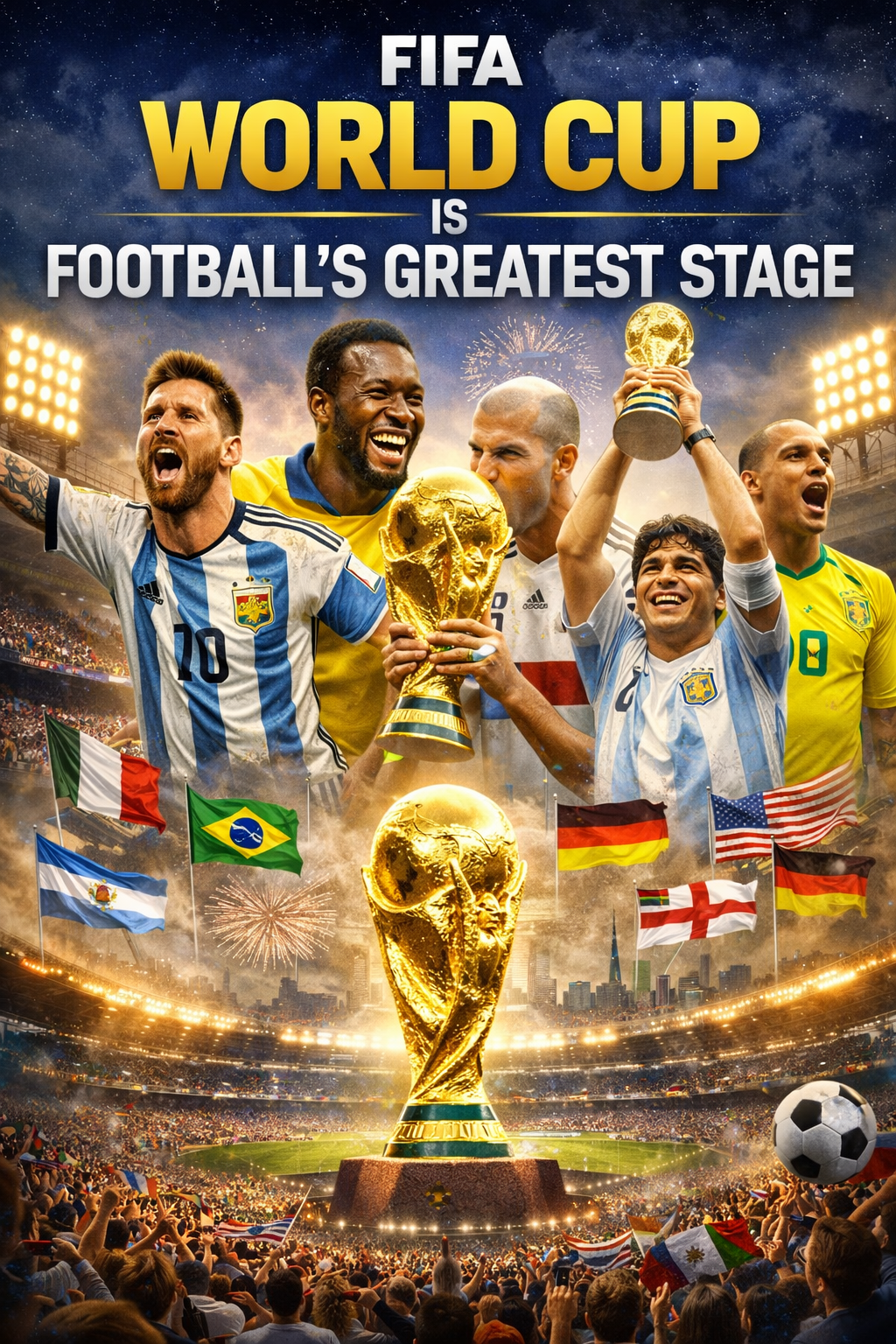
From Pelé’s teenage brilliance to Maradona’s controversial genius, from Zidane’s magic to Messi’s redemption — this tournament has always been about more than goals.
It is about eras.
2️⃣ The Weight of the Trophy
Unlike club football, where players can chase trophies every year, the World Cup offers only a few chances in a lifetime.
A player might get:
- 3 or 4 opportunities at most.
- One injury could end the dream.
- One mistake could define a career forever.
That pressure transforms ordinary matches into psychological battles.
Winning the World Cup changes legacy permanently:
- Good player → Great player
- Great player → Immortal legend
3️⃣ The Drama No Scriptwriter Could Create
The World Cup produces drama that cinema cannot match.
- Last-minute goals.
- Penalty shootout heartbreak.
- Underdog victories.
- Giant collapses.
Think about how smaller nations have stunned giants. The unpredictability creates magic.
Unlike club tournaments dominated by financial powerhouses, the World Cup levels the playing field — at least emotionally.
4️⃣ A True Global Stage
No other football event matches its universal reach.
- Over 200 nations attempt qualification.
- Billions watch worldwide.
- Entire continents unite behind teams.
For many players from smaller countries, the World Cup is their only global spotlight. It transforms unknown talents into international heroes overnight.
5️⃣ National Pride > Club Loyalty
In club football, fans are divided.
In the World Cup, nations unite.
Political differences disappear. Language barriers dissolve. Everyone wears the same colors.
That emotional unity amplifies the intensity of every match.
6️⃣ Legends Are Born Here
Some players are remembered primarily because of the World Cup:
- Pelé (1958, 1970)
- Maradona (1986)
- Zidane (1998)
- Ronaldo Nazário (2002)
- Messi (2022)
Their performances were not just skillful — they were myth-making.
The World Cup doesn’t just reward talent.
It rewards courage under extreme pressure.
7️⃣ Tactical Evolution on Display
Each edition becomes a snapshot of football evolution:
- 1970s – Total Football
- 2000s – Tactical discipline
- 2010s – High pressing & athleticism
- Modern era – Hybrid systems & analytics
The World Cup acts as a laboratory of global tactical experimentation.
8️⃣ The Pain Makes the Glory Greater
Why does winning feel so special?
Because losing hurts deeply.
World Cup defeats are generational scars.
Final losses stay in national memory for decades.
The contrast between devastation and ecstasy is what makes victory unforgettable.
Final Reflection
The FIFA World Cup is football’s greatest stage because it combines:
✔ History
✔ Drama
✔ Cultural identity
✔ Tactical excellence
✔ Emotional intensity
✔ Generational legacy
It is not just about who scores.
It is about who carries a nation’s dreams — and who can survive the weight.
Every four years, heroes rise.
Every four years, hearts break.
And every four years, football reminds the world why it is the beautiful game.
Why is the World Cup bigger than the Champions League?
The UEFA Champions League is elite, but it represents clubs. The World Cup represents nations. Emotional investment is exponentially higher because identity is involved.
Does individual brilliance matter more in the World Cup?
Yes. The short format means one moment of genius can change history. Maradona’s solo goal in 1986 or Messi’s decisive performances in 2022 are prime examples.
Why does pressure feel higher in the World Cup?
Because:
It happens once every four years.
Entire countries expect success.
Failure becomes part of national memory.
Club football allows redemption next season. The World Cup does not.
Is the World Cup still relevant in the era of club dominance?
Absolutely. Even players who win multiple club trophies openly say the World Cup is their ultimate dream.
The badge on the chest matters more than the name on the back.
Can modern football’s commercialization reduce its magic?
While commercialization exists, the emotional core remains intact. When the national anthem plays before kickoff, money disappears — pride takes over.