FIFA World Cup 2026: The Ultimate Battle for Global Football Supremacy
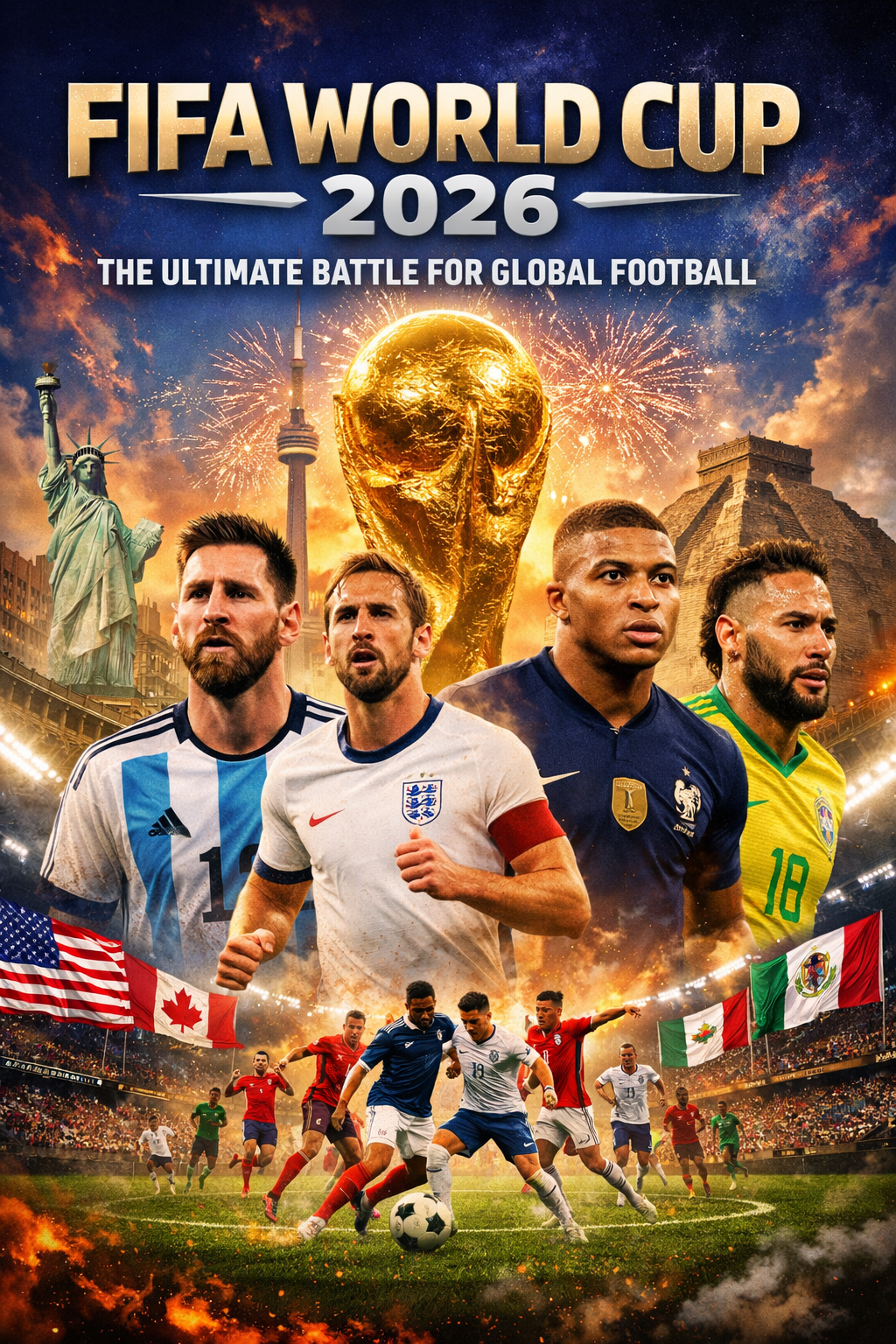
The 2026 FIFA World Cup is not just another football tournament — it will become the biggest and most competitive edition in history. With an expansive format, global superstars, up-and-coming young talents and three host nations, this World Cup promises drama, passion and unforgettable moments.
In this in-depth analysis, we’ll explore the tournament structure, key competitors, tactical trends, key players, underdog stories, and predictions — along with a detailed Q&A section at the end.
Table of Contents
1. A Historic Tournament Format
For the first time, the World Cup will feature 48 teams, expanding from the traditional 32-team format. The tournament will be hosted jointly by:
- United States
- Canada
- Mexico
This expansion means:
- More matches
- More representation from Asia, Africa, and North America
- Greater global competition
The new format increases opportunities for emerging football nations to compete on the world stage, making the road to the trophy even more unpredictable.
2. The Major Title Contenders
Argentina – Defending Champions
Argentina national football team will enter the tournament with confidence after their historic triumph in the previous edition. Even as a new generation takes over, their winning mentality remains intact.
Strengths: Tactical discipline, midfield creativity, tournament experience
Challenge: Managing transition from legends to young stars
France – Depth & Power
France national football team continues to dominate world football with squad depth and athleticism. Their blend of youth and experience makes them one of the strongest contenders.
Strengths: Explosive attack, strong bench, tactical flexibility
Challenge: Defensive consistency in high-pressure matches
Brazil – The Eternal Favorites
Brazil national football team always carries the weight of expectation. Known for flair and attacking brilliance, Brazil will aim to reclaim global supremacy.
Strengths: Creative forwards, fast wingers
Challenge: Mental resilience in knockout games
England – The Tactical Evolution
England national football team has shown consistency in recent tournaments. With tactical maturity and squad balance, they are serious contenders.
Strengths: Organized defense, attacking midfield depth
Challenge: Handling knockout-stage pressure
3. Dark Horses & Underdogs
The expanded format gives opportunities to rising nations:
- Morocco national football team – After historic performances in recent tournaments, they are no longer underdogs.
- Japan national football team – Tactical discipline and technical ability make them dangerous.
- United States men’s national soccer team – Home advantage could inspire a deep run.
Underdogs often shape the narrative of the World Cup. A single upset can change everything.
4. Tactical Trends to Watch
Modern football is evolving rapidly. Expect to see:
- High pressing systems
- Flexible formations (3-4-3 / 4-2-3-1)
- Inverted full-backs
- Data-driven tactical adjustments
The team that adapts fastest during the tournament will gain a decisive edge.
5. Key Players Who Could Define the Tournament
Every World Cup creates heroes. This edition could be shaped by:
- Established superstars seeking legacy
- Young talents announcing their arrival
- Goalkeepers becoming penalty shootout specialists
In a tournament of fine margins, individual brilliance often decides destiny.
6. The Impact of Hosting Across Three Nations
Hosting across the United States, Canada, and Mexico brings:
- Diverse stadium atmospheres
- Varied climate conditions
- Massive global commercial reach
The tournament will likely break attendance and revenue records, expanding football’s footprint further in North America.
Predictions: Who Has the Edge?
While Argentina and France may start as favorites, tournaments are rarely predictable. The team that balances tactical intelligence, squad depth, and mental strength will lift the trophy.
Early Prediction: A European–South American final seems highly likely.
Final Thoughts
The 2026 FIFA World Cup is more than a tournament — it’s a celebration of global unity through soccer. With extensive participation, tactical innovation and generational talent, it truly represents the ultimate battle for global football supremacy.
Whether giants defend their dominance or new powers emerge, one thing is certain: the world will be watching.
Why is FIFA World Cup 2026 considered historic?
Because it is the first 48-team World Cup and the first to be hosted by three nations.
Which continent has the highest chances of winning?
Historically, Europe and South America dominate. However, emerging Asian and African teams are closing the gap.
Can a host nation win the tournament?
Yes. Home advantage provides crowd support and familiarity with conditions, which can boost performance.
What will be the biggest challenge in the expanded format?
Squad rotation and player fitness. More matches mean higher physical demand.
Who could be the breakout star?
Young players from Europe and South America are likely to shine, especially attacking midfielders and dynamic wingers.