
The Rise of the Beautiful Game: A Deep Dive into Football’s Past
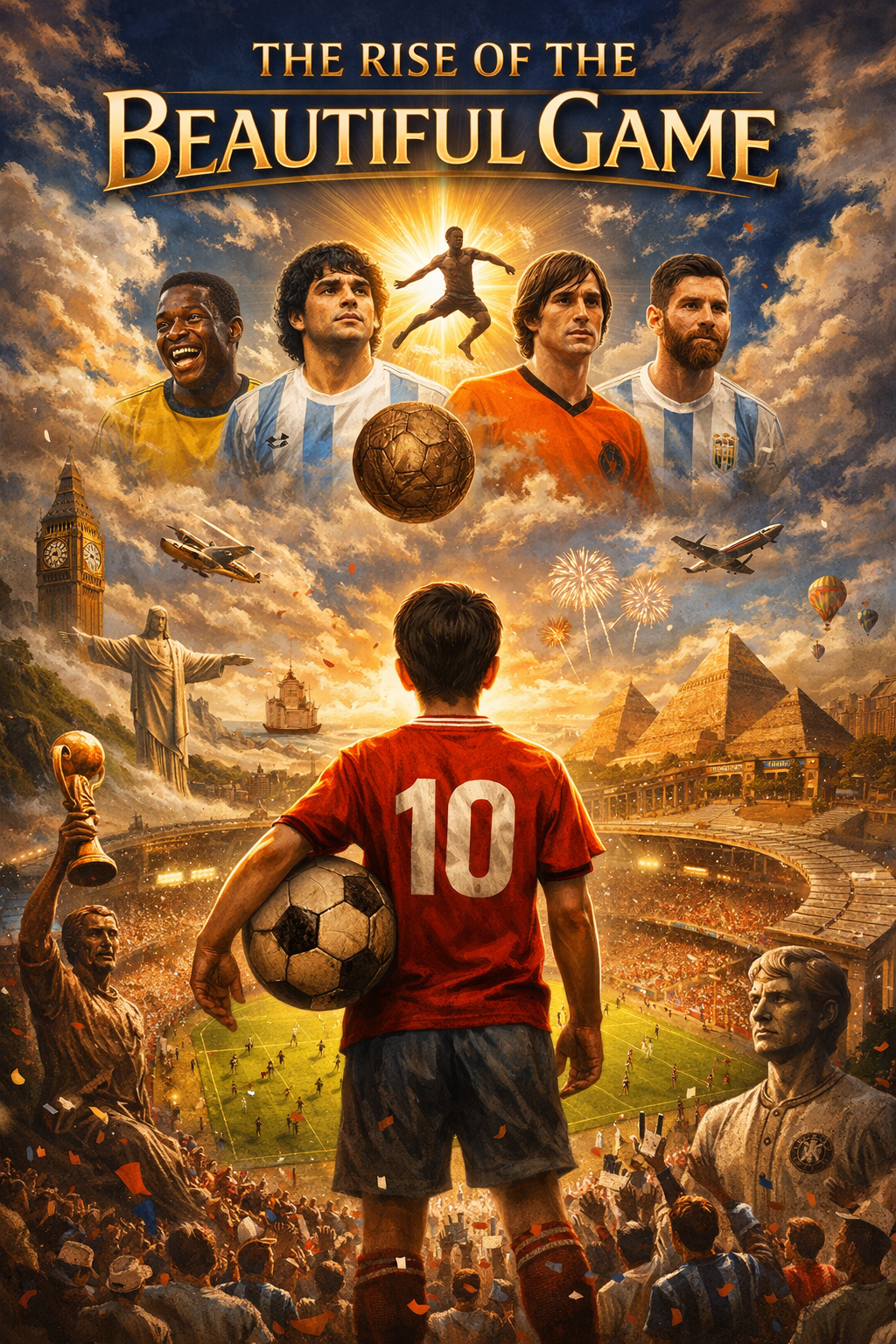
Soccer, often called “The Beautiful Game,” is more than just a sport — it’s a global language spoken by billions of people. From dusty village fields to grand stadiums hosting the FIFA World Cup, football’s journey is a story of passion, culture, politics and evolution. This in-depth analysis explores how football rose from ancient roots to become the most loved sport in the world.
Table of Contents
1. The Ancient Origins of Football
Long before modern rules were written, civilizations played ball games that resembled football.
- In ancient China, Cuju was played during the Han Dynasty.
- In ancient Rome, Harpastum was a popular team game.
- Medieval England saw chaotic “mob football,” played between villages.
These early forms lacked structure, but they carried the same excitement and competitive spirit we see today.
Q & A
Q: Was football invented in England?
A: Modern football rules were formalized in England, but ball games existed in many ancient cultures before that.
Q: What made early football different?
A: There were no standardized rules, no referees, and often unlimited players.
2. The Birth of Modern Football (19th Century England)
The real transformation began in 1863 when the Football Association (FA) was formed in England. This separated football from rugby and created standardized rules.
Key developments:
- Defined field dimensions
- Banned handling the ball (except for the goalkeeper)
- Introduced organized competitions
Soon after, clubs began forming, and football spread rapidly across Europe and South America.
Q & A
Q: Why was 1863 important?
A: It marked the official codification of football rules, shaping the modern game.
Q: How did football spread globally?
A: Through British sailors, traders, and students who introduced the game worldwide.
3. The Creation of FIFA and Global Expansion
In 1904, the Fédération Internationale de Football Association (FIFA) was founded in Paris to govern international competitions.
The first FIFA World Cup was held in 1930 in Uruguay. It marked the beginning of football as a global spectacle.
Over the decades:
- Television expanded football’s reach.
- International tournaments increased competition.
- Clubs became global brands.
Q & A
Q: Why is the World Cup so important?
A: It unites nations and represents the highest level of international football competition.
Q: Which country won the first World Cup?
A: Uruguay in 1930.
4. The Golden Eras and Legendary Players
Football’s rise is also the story of its legends.
- Pelé brought artistry and global fame.
- Diego Maradona symbolized passion and controversy.
- Lionel Messi and Cristiano Ronaldo defined modern excellence.
These icons didn’t just win trophies — they inspired generations.
Q & A
Q: Why is Pelé called the King of Football?
A: He won three World Cups and became a global ambassador for the sport.
Q: What made Maradona special?
A: His extraordinary dribbling ability and iconic 1986 World Cup performances.
5. The Tactical Evolution of the Game
Football has constantly evolved tactically:
- 2-3-5 formation (early attacking style)
- Catenaccio (Italian defensive system)
- Total Football (Netherlands, 1970s)
- Tiki-taka (Spain, 2008–2012)
Modern football now blends high pressing, analytics, and sports science.
Q & A
Q: What is Total Football?
A: A system where players can interchange positions fluidly.
Q: How has technology changed football?
A: VAR, goal-line technology, and data analytics have increased fairness and precision.
6. Football’s Cultural and Political Impact
Football has influenced:
- National identity
- Social movements
- Economic growth
Clubs like FC Barcelona became symbols of regional pride. International tournaments often reflect political tensions and unity.
Football is more than 90 minutes — it reflects society itself.
Q & A
Q: Why is football called “The Beautiful Game”?
A: Because of its artistic style, emotional drama, and universal accessibility.
Q: How does football unite people?
A: It crosses language, religion, and cultural barriers.
7. The Modern Era: Commercialization and Global Power
Today, football is a multi-billion-dollar industry:
- Mega broadcasting deals
- Sponsorship empires
- Social media influence
- Global fanbases
Leagues like the English Premier League and tournaments like the Champions League attract millions worldwide.
Q & A
Q: Is modern football too commercial?
A: While commercialization has increased profits, it has also improved infrastructure and global exposure.
Q: What is the future of football?
A: Greater globalization, youth development, women’s football growth, and advanced technology integration.
Conclusion: Why Football Continues to Rise
From ancient fields to global stadiums, the rise of football is a story of evolution, unity and passion. It survives wars, political differences and generational shifts because its core remains simple – a ball, a goal and the human desire to compete.
The Beautiful Game continues to grow because it belongs to everyone.