CR7’s Golden Years: How Ronaldo Changed Modern Football
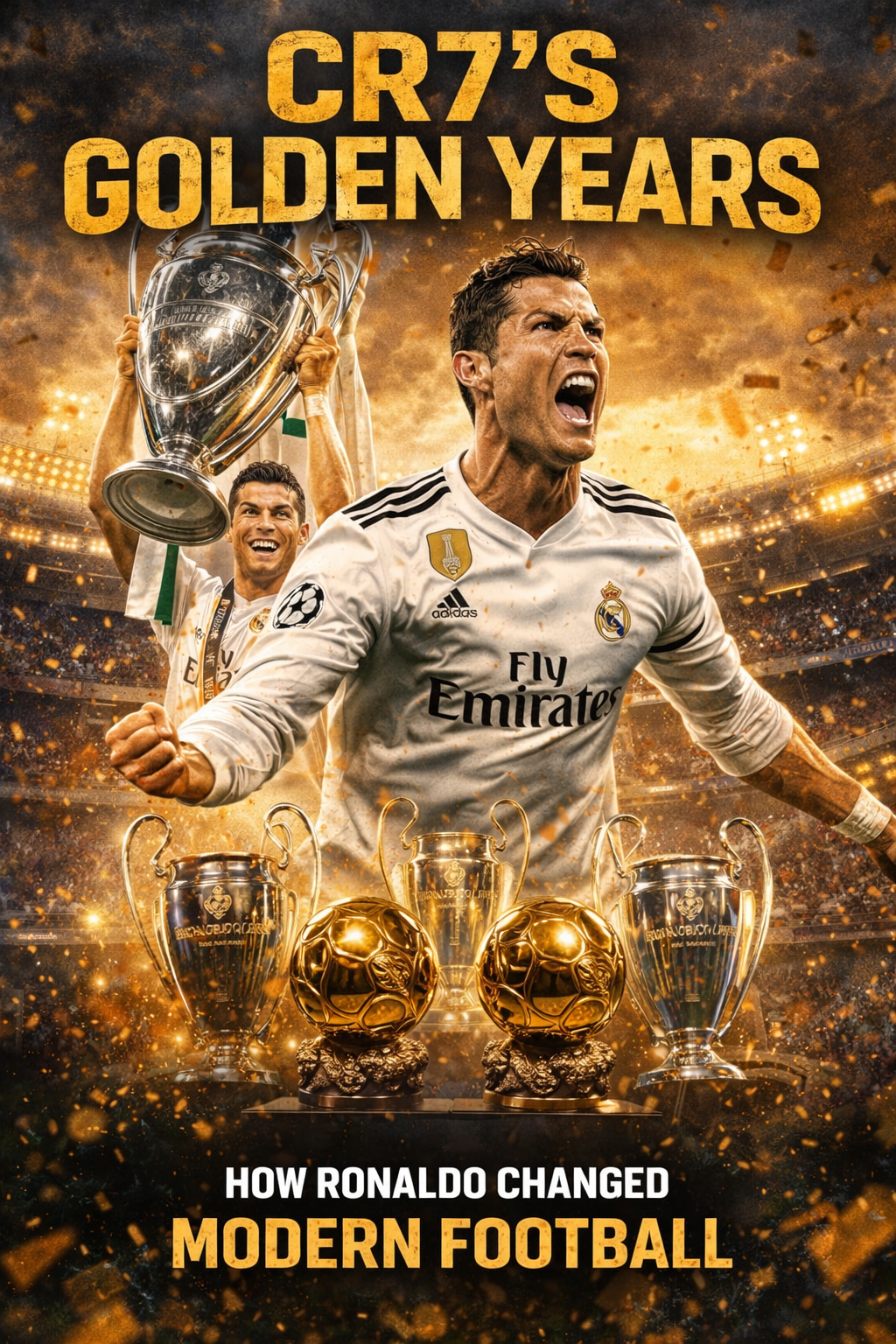
Football has seen many legends, but few have shaped the modern era like Cristiano Ronaldo. His “golden years” weren’t just about trophies and goals — they redefined athletic standards, professionalism, branding and the identity of a modern soccer superstar. From the bright lights of England to dominance in Spain and glory in Europe, Ronaldo transformed the game both on and off the pitch.
This is the in-depth story of how CR7 changed modern football forever.
Table of Contents
1. The Birth of a Global Superstar
Ronaldo’s golden era truly began at Manchester United under Sir Alex Ferguson. When he arrived as a teenager from Sporting CP in 2003, he was skillful but raw. By 2008, he had become the best player in the world — winning the UEFA Champions League and his first Ballon d’Or.
But this wasn’t just about trophies. Ronaldo introduced:
- Explosive pace combined with physical power
- Technical brilliance with athletic intensity
- A winger who scored like a striker
He proved that wide players could dominate goal-scoring charts.
2. The Real Madrid Revolution
In 2009, Ronaldo moved to Real Madrid for a then world-record fee. This transfer marked the beginning of football’s commercial explosion.
At Madrid, Ronaldo:
- Became the club’s all-time top scorer
- Won four Champions League titles
- Scored over 450 goals in just nine seasons
During this period, he competed fiercely with Lionel Messi of FC Barcelona. Their rivalry elevated football to unprecedented levels of global attention. Every El Clásico became a worldwide spectacle.
This era changed football in three major ways:
1. Statistical Obsession
Fans and analysts began measuring greatness through numbers — goals per game, hat-tricks, assists, clutch performances. Ronaldo thrived in this metrics-driven era.
2. Physical Perfection
Ronaldo set new fitness standards. His training, diet, recovery methods, and body conditioning became a blueprint for modern players.
3. Big-Game Mentality
From decisive goals in Champions League knockouts to match-winning performances in finals, Ronaldo built a reputation as a player for the biggest moments.
3. International Glory with Portugal
Ronaldo’s legacy isn’t limited to club football. With the Portugal national team, he led his country to victory at UEFA Euro 2016 and later the UEFA Nations League.
Before Ronaldo, Portugal had talented squads but lacked major trophies. His leadership mentality changed that narrative. He proved that one player’s mentality can transform an entire nation’s belief.
4. The Juventus Phase: Reinventing Greatness
When Ronaldo joined Juventus in 2018, many questioned whether he could dominate in Italy’s tactical and defensive league.
He answered critics by:
- Winning Serie A titles
- Becoming the league’s top scorer
- Delivering decisive Champions League performances
This move showed that elite players could remain dominant across multiple leagues — strengthening the concept of football as a global business.
5. The CR7 Brand: Football Meets Business
Modern football is not just about sport — it’s about branding.
Ronaldo revolutionized athlete marketing:
- Social media dominance (hundreds of millions of followers)
- CR7 fashion and lifestyle brand
- Endorsements across industries
He became more than a footballer — he became a global brand. Today’s players understand that performance and personal branding go hand in hand.
6. How Ronaldo Changed Modern Football
A. Professionalism as a Lifestyle
Young players now treat football as a 24/7 profession. Nutrition, sleep, gym routines — Ronaldo made it standard.
B. The Mentality of Relentlessness
He showed that talent alone isn’t enough. Discipline, ambition, and obsession with improvement separate legends from great players.
C. The Goal Machine Era
Modern forwards are expected to score 40–50 goals a season. Ronaldo helped normalize extraordinary numbers.
D. The Power of Rivalries
The Ronaldo–Messi era pushed standards to unimaginable heights. It forced players to continuously evolve.
7. Legacy Beyond Numbers
While his statistics are historic, Ronaldo’s greatest impact lies in inspiration. Millions of young players across continents dream bigger because of him. He proved that coming from humble beginnings does not limit global greatness.
His golden years redefined:
- Athletic excellence
- Commercial power
- Competitive mentality
- Global fandom
He didn’t just play in modern football — he shaped it.
Conclusion
The golden years of CR7 were more than a chapter in football history; they were a transformative period for the sport itself. From tactical evolution to branding power, from physical standards to mental resilience, Ronaldo became the blueprint for the 21st century football superstar.
Modern football — faster, stronger, more commercial, more global — bears his mark.
What were Cristiano Ronaldo’s golden years?
His peak years are generally considered between 2008 and 2018, especially during his time at Manchester United and Real Madrid.
How did Ronaldo change football fitness standards?
He introduced elite-level conditioning, strict diet discipline, and recovery routines that influenced modern training culture.
What was the impact of the Ronaldo vs Messi rivalry?
It increased global interest in football, raised performance standards, and created one of the most iconic rivalries in sports history.
Did Ronaldo succeed in multiple leagues?
Yes. He won major trophies in England, Spain, and Italy, proving his adaptability.
What is Ronaldo’s biggest contribution to modern football?
His relentless mentality and professionalism reshaped how players approach their careers — making excellence a daily habit rather than occasional brilliance.