FIFA World Cup Players: Legends, Rising Stars & Game Changers
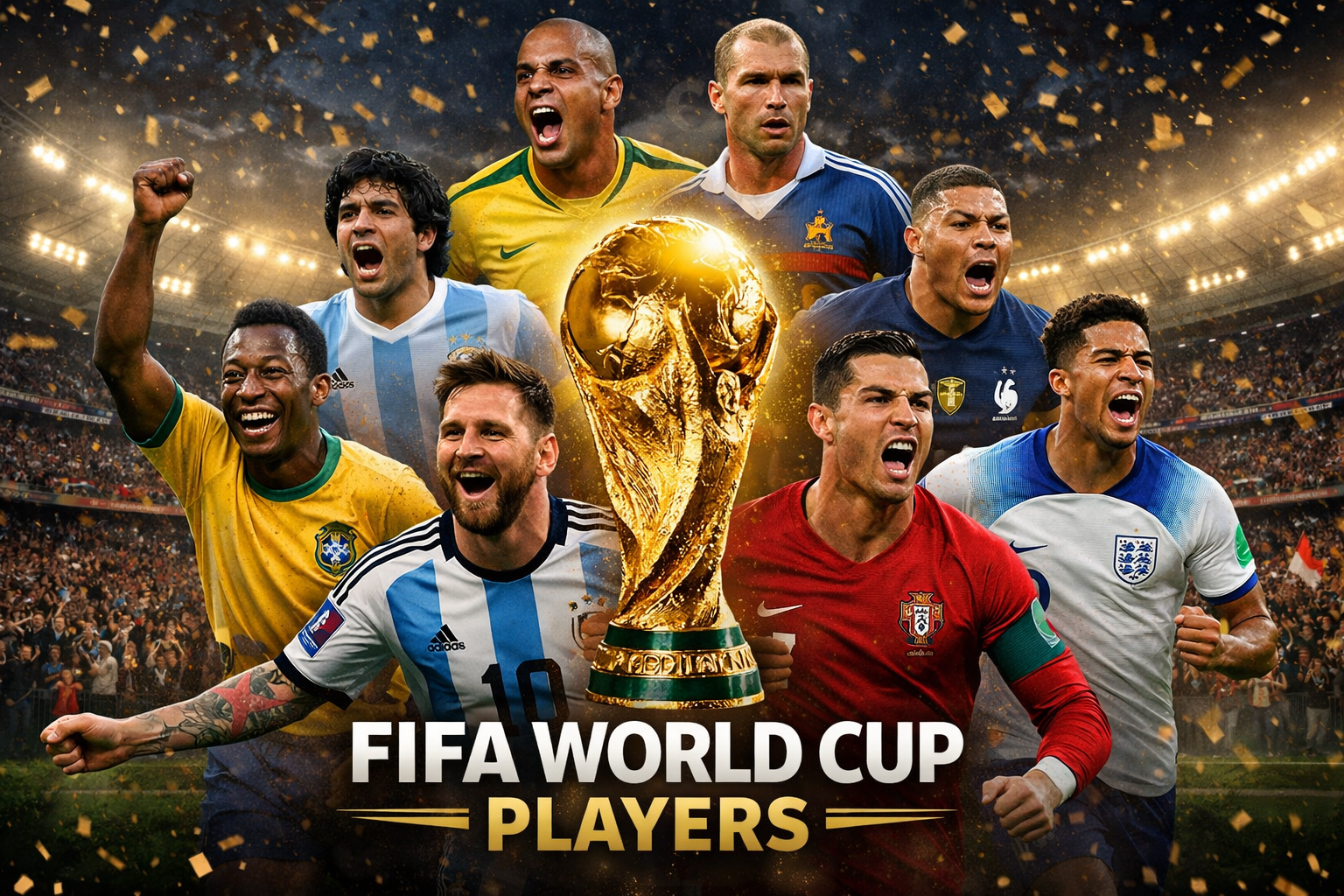
The FIFA World Cup is not just a tournament. It is the stage of football — a battlefield where dreams are either crowned with glory or crushed in a few seconds years. Every four stops the world. Flags waving. Street plan stadiums. In the middle of it all? From players.
Something about legends. Some coming is coming stars. And a few rare ones? They for the game forever.
So let’s dive deep into the world of FIFA World Cup players — the icons, the breakthrough talents and the true game changers die of football history has been known.
Table of Contents
The Magic of the FIFA World Cup
Why does the World Cup feel different from any other competition?
Because it’s not just about clubs. It’s about countries. Pride. Identity. History.
From the roar of 80,000 fans to billions watching worldwide, the pressure is unimaginable. And yet, certain players rise like warriors on a battlefield.
World Cup Legends: The Immortals of Football
Some players don’t just play in the World Cup — they define it.
Pelé – The King of Football
When you talk about greatness, you start with Pelé. Winning three World Cups (1958, 1962, 1970), Pelé wasn’t just talented — he was magical. At 17, he scored twice in a final. Think about that. Seventeen!
He turned football into art.
Diego Maradona – The Hand of God & The Goal of the Century
Few players carried a nation like Diego Maradona did in 1986.
One controversial goal. One breathtaking solo run against England. One unforgettable tournament.
Maradona didn’t just win the World Cup — he dragged Argentina to glory.
Zinedine Zidane – Elegance Under Pressure
In 1998, Zinedine Zidane rose above the moment. Two headers in the final against Brazil. Calm. Classy. Clinical.
Zidane made football look effortless — even when the world was watching.
Ronaldo Nazário – The Redemption Story
The 2002 World Cup was the redemption arc of Ronaldo Nazario.
After injury heartbreak in 1998, he returned stronger. Eight goals. Two in the final. A Golden Boot. That iconic haircut? Legendary.
Modern Era Icons
The modern World Cup era has been defined by two names.
Lionel Messi – The Dream Fulfilled
For years, critics questioned his international success. But in 2022, Lionel Messi completed football.
Seven goals. Leadership. A fairytale ending.
He didn’t just win the trophy — he won hearts.
Cristiano Ronaldo – The Relentless Warrior
Though he never lifted the World Cup, Cristiano Ronaldo remains one of the tournament’s biggest icons.
Explosive pace. Athleticism. Determination. Ronaldo embodies hunger.
And hunger changes games.
Rising Stars: The Future of the World Cup
Legends retire. But football never stops.
Kylian Mbappé – Speed of Light
At just 19, Kylian Mbappe lit up 2018. In 2022, he scored a hat-trick in the final.
That’s not talent. That’s destiny knocking.
Jude Bellingham – The Midfield General
Young, fearless, mature beyond his age. Jude Bellingham represents the new generation — technically gifted and mentally strong.
Erling Haaland – The Goal Machine
Although still waiting for a major World Cup breakthrough with Norway, Erling Haaland is a force of nature.
When he arrives on the World Cup stage fully? Defenders beware.
Game Changers: Players Who Shifted Tactics
Some players didn’t just score goals. They changed how football is played.
- Total football pioneers
- False nine revolution
- High pressing attackers
- Ball-playing defenders
From creative midfielders to attacking fullbacks, World Cup players constantly redefine the game.
The Psychology of a World Cup Player
What separates a good player from a legend?
Mental strength.
Imagine taking a penalty in a final. Billions watching. Your entire country holding its breath.
It’s not just skill. It’s courage.
Records That Define Greatness
- Most goals in a single tournament
- Most assists
- Youngest scorer
- Fastest hat-trick
Records turn players into stories. Stories turn into legends.
Why the World Cup Creates Heroes Overnight
Club form doesn’t guarantee World Cup success.
Sometimes, a relatively unknown player becomes a superstar in 90 minutes.
Remember James Rodríguez in 2014? One tournament. Global fame.
That’s the magic.
The Role of Teamwork
Even legends need teams.
Football isn’t tennis. It’s a symphony. Eleven players, one rhythm.
The greatest World Cup players shine because their teams support them.
How Rising Stars Become Legends
It starts with talent.
Then consistency.
Then one defining World Cup moment.
That moment decides everything.
The Impact Beyond Football
World Cup players inspire generations.
Kids copy their hairstyles.
Wear their jerseys.
Dream their dreams.
These players don’t just play — they influence culture.
Conclusion: The Legacy of FIFA World Cup Players
The FIFA World Cup is more than a trophy. It’s a legacy machine.
It turns boys into legends.
Turns pressure into poetry.
And write stories that live forever.
From the brilliance of Pelé to the fairytale of Messi, from the explosion of Mbappé to the next unsung hero waiting for his moment – the World Cup will always belong to those brave enough to seize it.
Because in the end, football doesn’t remember participation.
It remembers greatness.
Who is the greatest FIFA World Cup player of all time?
Many consider Pelé or Diego Maradona the greatest, while modern fans argue for Lionel Messi after his 2022 triumph.
Who scored the most goals in a single World Cup?
Just Fontaine holds the record with 13 goals in 1958.
Who is the best young player in recent World Cups?
Kylian Mbappé stands out due to his performances in 2018 and 2022.
Why is the FIFA World Cup so important for players?
It’s the highest level of international football. Success here defines careers and legacies.
Can a rising star become a legend in one World Cup?
Absolutely. A single unforgettable tournament performance can turn a young player into a global icon.