Top FIFA World Cup Players Who Changed Football History
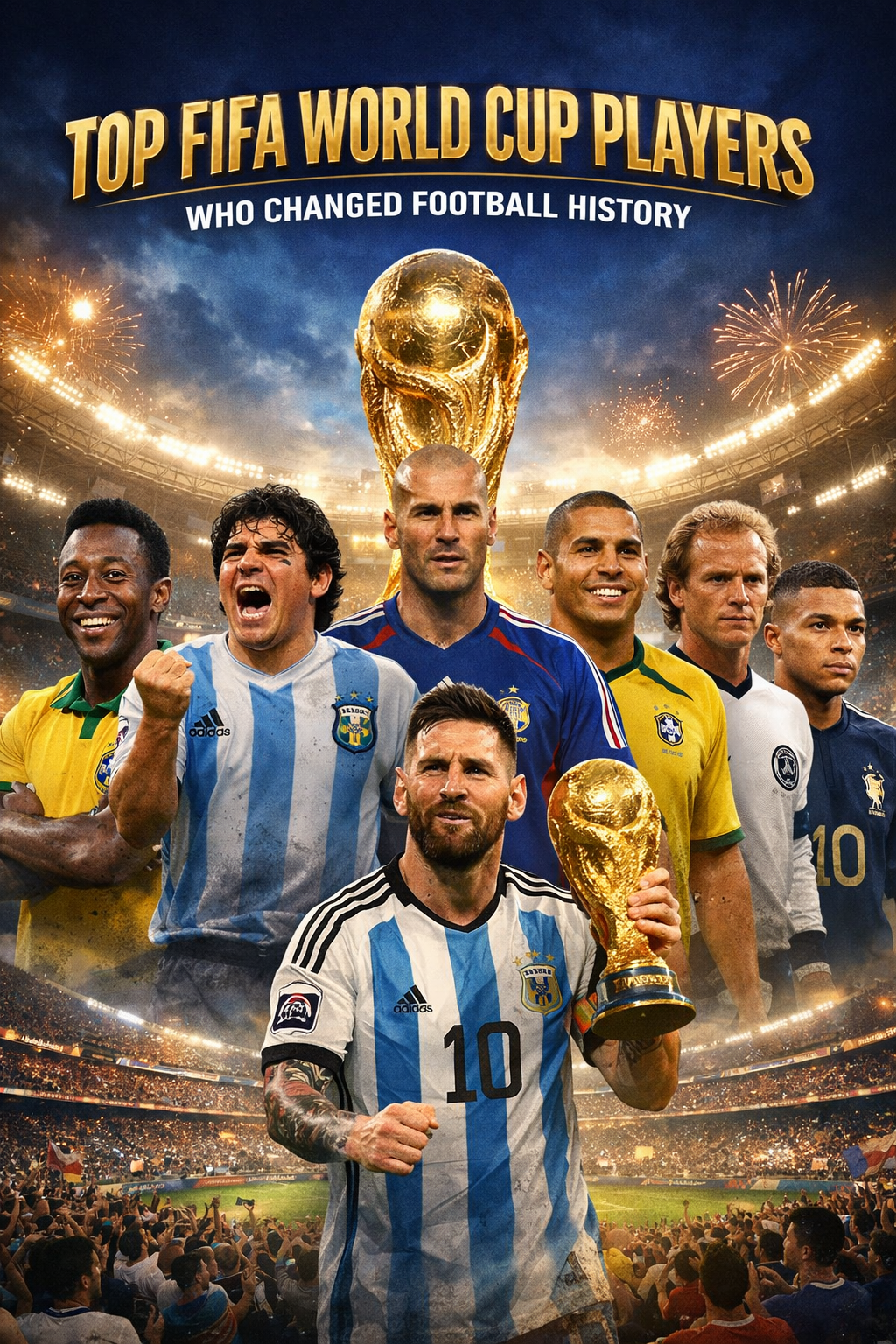
The FIFA World Cup is more than just a tournament – it’s the ultimate stage where legends are born and history is rewritten. Every four years, the world watches as football’s greatest talents compete not just for a trophy but for immortality. Some players do more than win games; they redefine tactics, inspire generations, and change the very identity of the sport.
In this in-depth and detailed blog, we take a look at the best FIFA World Cup players who have transformed football history through their skill, leadership, innovation, and memorable performances.
Table of Contents
1. Pelé – The King Who Globalized Football
When discussing World Cup greatness, Pelé’s name stands above all.
World Cup Impact:
- 1958 (Sweden) – Won at just 17 years old.
- 1962 (Chile) – Secured back-to-back titles.
- 1970 (Mexico) – Led arguably the greatest team ever assembled.
Pelé remains the only player to win three World Cups (1958, 1962, 1970). His creativity, vision, and finishing ability made Brazil the face of beautiful football.
How He Changed Football:
- Turned football into a global commercial phenomenon.
- Inspired attacking, skill-based play.
- Became the sport’s first true global superstar.
Without Pelé, football might not have reached the universal popularity it enjoys today.
2. Diego Maradona – The Genius and the Controversy
Few players have dominated a single tournament like Maradona did in 1986 (Mexico).
The 1986 World Cup:
- Scored the “Hand of God” goal.
- Scored the “Goal of the Century” against England.
- Carried Argentina almost single-handedly to the title.
How He Changed Football:
- Showed that one individual could dictate an entire World Cup.
- Symbolized rebellion and national pride.
- Elevated South American football identity.
Maradona was imperfect—but that imperfection made him human and unforgettable.
3. Zinedine Zidane – Elegance Under Pressure
Zidane’s influence peaked in the 1998 World Cup (France).
Historic Moments:
- Two headers in the 1998 final vs Brazil.
- Led France to its first World Cup title.
- Returned in 2006 to carry France to the final again.
Tactical Influence:
- Master of midfield control.
- Perfect blend of strength and grace.
- Proved playmakers could dominate modern physical football.
Zidane redefined the attacking midfielder role on the world stage.
4. Ronaldo Nazário – The Phenomenon
Before injuries slowed him down, Ronaldo was unstoppable.
World Cup Journey:
- 1998 – Reached the final.
- 2002 – Won the tournament with 8 goals.
- 2006 – Became the all-time World Cup top scorer (at the time).
His Legacy:
- Revolutionized the striker role.
- Combined speed, power, and technical excellence.
- Inspired modern forwards like Mbappé and Haaland.
Ronaldo made explosive attacking football fashionable again.
5. Lionel Messi – The Artist Who Completed His Story
For years, critics said Messi needed a World Cup to complete his legacy.
The 2022 Redemption:
- Led Argentina to glory in Qatar.
- Scored in the final against France.
- Delivered one of the greatest World Cup performances ever.
Why He Changed History:
- Proved consistency across four tournaments.
- Showed leadership beyond club football.
- Settled the GOAT debate for many fans.
Messi’s triumph in 2022 was not just victory—it was poetic closure.
6. Franz Beckenbauer – The Tactical Innovator
Nicknamed “Der Kaiser,” Beckenbauer transformed defensive play.
Achievements:
- Won the 1974 World Cup as captain.
- Later won as a manager in 1990.
Tactical Impact:
- Popularized the “libero” or sweeper role.
- Combined defense with playmaking ability.
He changed how defenders contributed to attacking build-up.
7. Kylian Mbappé – The New Generation Star
At just 19, Mbappé won the 2018 World Cup.
2018 & 2022 Highlights:
- Scored in the 2018 final.
- Hat-trick in the 2022 final.
- Became one of the youngest players to dominate two tournaments.
Why He Matters:
- Represents the future of football.
- Blends pace, intelligence, and finishing.
- Redefining modern counter-attacking play.
Mbappé proves the World Cup still creates superstars.
How These Players Changed Football History
1. Tactical Evolution
Beckenbauer changed defensive systems.
Zidane refined midfield dominance.
Ronaldo modernized striker movement.
2. Cultural Impact
Pelé globalized the sport.
Maradona symbolized passion and rebellion.
Messi united generations.
3. Commercial Growth
These icons turned the World Cup into a billion-dollar spectacle.
The True Meaning of World Cup Greatness
World Cup greatness is not just about goals. It is about:
- Performing under maximum pressure
- Inspiring a nation
- Changing how football is played
- Leaving a legacy that outlives retirement
The biggest players don’t just win trophies—they shape eras.
Conclusion
From Pelé’s magic in 1958 to Messi’s redemption in 2022, the FIFA World Cup has been the ultimate proving ground. These players didn’t just participate — they changed the sport forever.
The history of football is written every four years. And somewhere, in a stadium full of dreams, the next legend awaits.
Who is the greatest FIFA World Cup player of all time?
There is no single answer. Pelé is the most decorated, Maradona had the most dominant single tournament, and Messi completed football with his 2022 triumph.
Which World Cup performance is considered the best ever?
Maradona in 1986 and Messi in 2022 are widely regarded as the greatest individual campaigns.
Who scored the most goals in World Cup history?
Currently, Miroslav Klose holds the record with 16 goals (though not listed above as a “transformational” figure).