From Dreams to Destiny: The Excitement of the Upcoming FIFA World Cup
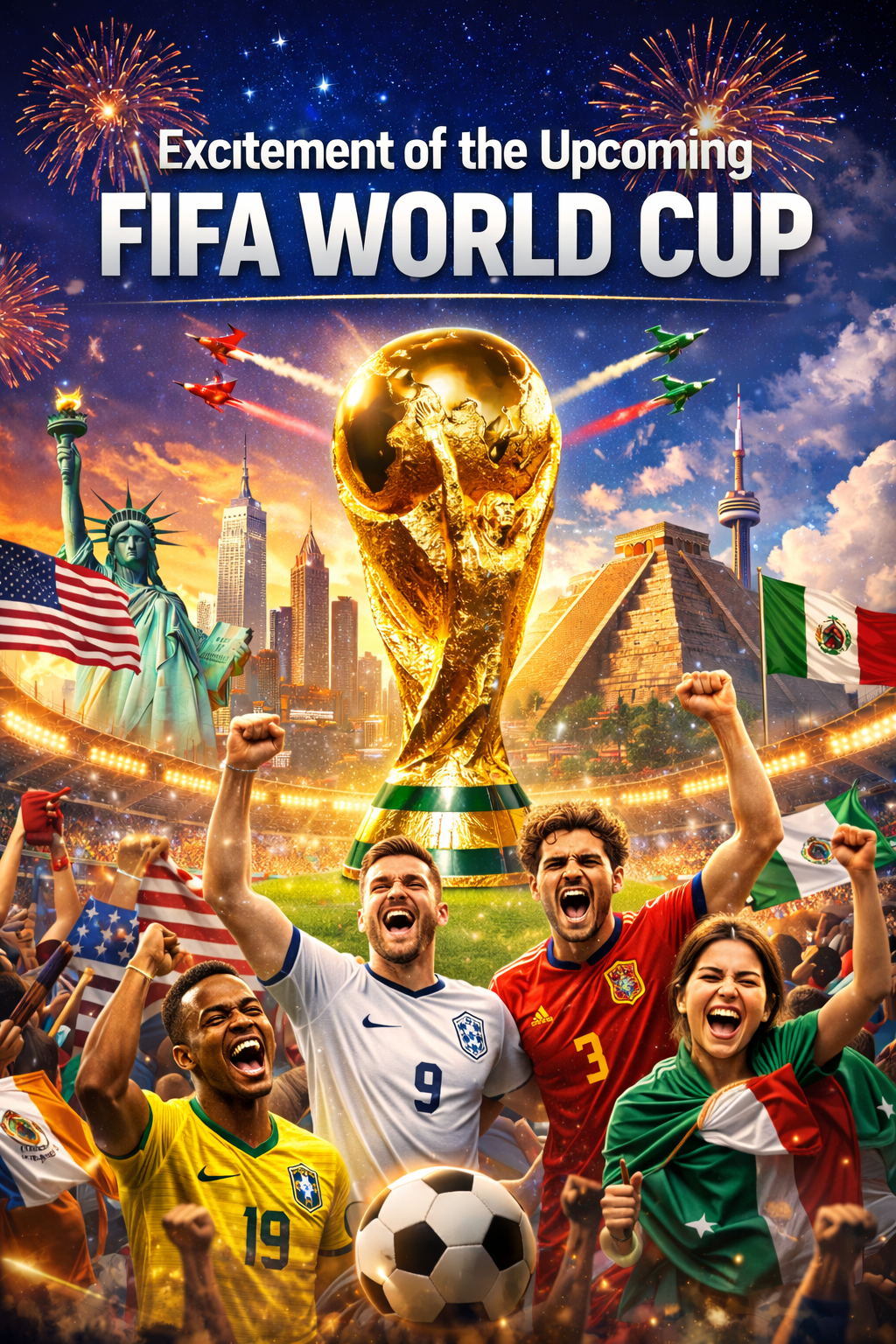
Every four years, the world pauses for one extraordinary month. Flags fly higher, rivalries grow stronger and dreams become fate on football’s biggest stage. The upcoming FIFA World Cup 2026 is more than just a tournament — it’s a global celebration of passion, pride and possibility.
From young players dreaming in small neighborhoods to nations preparing for glory, the 2026 World Cup promises unforgettable drama, new heroes and historic transformation.
Let’s take a deep dive into what makes this upcoming edition so exciting.
Table of Contents
A Tournament of Unmatched Scale
For the first time in history, the World Cup will be hosted by three nations:
- United States
- Canada
- Mexico
This tri-nation hosting represents unity across borders and highlights football’s explosive growth in North America.
Why This Is Historic:
- Mexico becomes the first country to host three World Cups.
- Canada hosts men’s World Cup matches for the first time.
- The United States returns as host after its commercially groundbreaking 1994 edition.
With massive stadiums, advanced infrastructure, and global media coverage, the 2026 tournament could become the most-watched sporting event in history.
From 32 to 48 Teams: Bigger Dreams, Bigger Stage
The expansion to 48 teams marks a revolutionary shift.
What the New Format Means:
- 12 groups of 4 teams
- Top 2 teams from each group qualify
- 8 best third-placed teams advance
- Introduction of a Round of 32
This expansion allows more nations from Africa, Asia, and CONCACAF to participate — creating new opportunities for emerging football cultures.
For smaller nations, qualification itself becomes destiny. For fans, it means more matches, more storylines, and more unforgettable moments.
The Birth of New Heroes
Every World Cup creates icons. From unexpected goal scorers to heroic goalkeepers, global legends are often born under World Cup pressure.
Traditional powerhouses will enter as favorites:
- Argentina
- France
- Brazil
- Germany
- England
But the excitement lies in potential surprises from nations like:
- Morocco
- Japan
- United States
- Senegal
With more teams and more matches, 2026 increases the possibility that a young, relatively unknown player could become the next global superstar.
The Tactical Evolution of Modern Football
The modern game is evolving rapidly. By 2026, expect:
- High-intensity pressing systems
- Inverted fullbacks controlling midfield
- Fluid attacking formations
- Heavy use of data analytics and sports science
- Deep squad rotation strategies
Because of the expanded format, squad depth will be crucial. Managing player fitness across a longer tournament could be the difference between glory and heartbreak.
The Fan Experience: A Global Festival
The upcoming World Cup will likely offer:
- Massive stadium atmospheres (70,000+ capacity venues)
- Immersive fan zones across major cities
- Advanced digital viewing experiences
- Record-breaking global broadcast reach
Football will not just be played — it will be celebrated across an entire continent.
Economic & Cultural Impact
The 2026 edition is projected to generate billions in revenue through:
- Tourism
- Broadcasting rights
- Sponsorship deals
- Infrastructure investments
More importantly, culturally, it may permanently strengthen football’s status in North America and inspire a new generation of players.
Why This World Cup Feels Different
The excitement of the upcoming World Cup comes from:
- A larger and more inclusive format
- The opportunity for new football nations to shine
- The potential emergence of the next global icons
- A new commercial and cultural era for the sport
It’s not just about who wins the trophy — it’s about the journey from dreams to destiny.
🏁 Final Thoughts
The FIFA World Cup 2026 is shaping up to be a landmark event in football history. It combines tradition with transformation, heritage with innovation, and dreams with destiny
For players, it is the ultimate stage.
For nations, it is pride personified.
For fans, it is pure emotion.
When the first whistle blows, the world will once again unite in celebration of the beautiful game.
How many teams will participate in the 2026 World Cup?
48 teams — the largest number in World Cup history.
Which countries are hosting the upcoming World Cup?
The United States, Canada, and Mexico.
What is special about the new format?
It introduces 12 groups of 4 teams and a Round of 32 knockout stage, increasing global representation.
Who are the early favorites?
Argentina, France, Brazil, Germany, and England are among the strongest contenders.
Why is this World Cup historically significant?
It is the first to feature 48 teams and the first hosted by three nations.
When will the 2026 FIFA World Cup take place?
It is scheduled for June–July 2026.