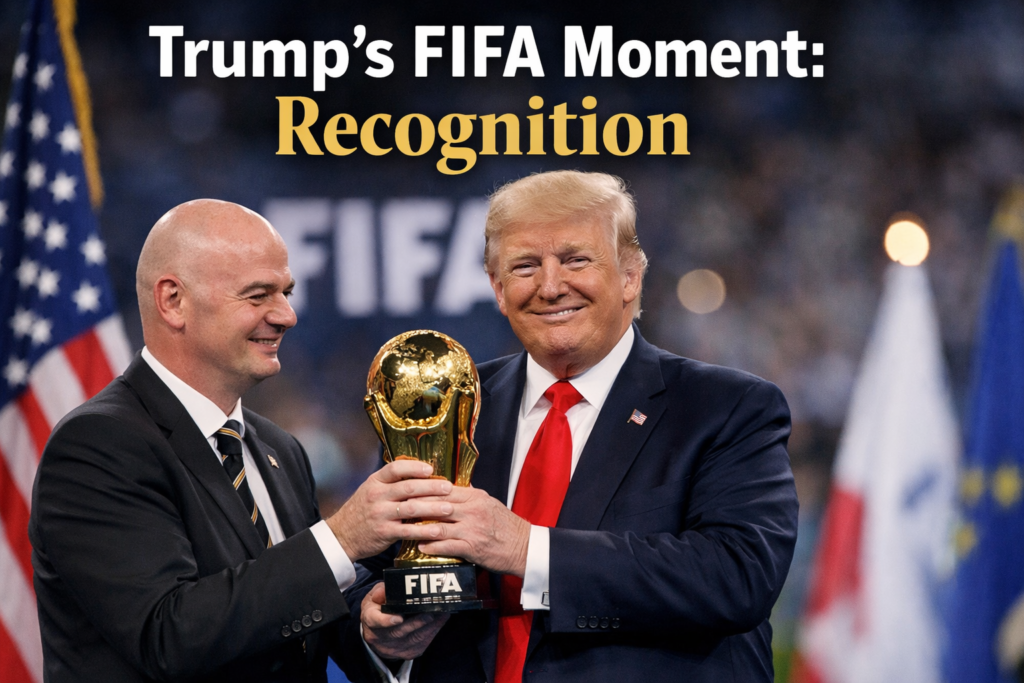
Trump’s FIFA Moment: Recognition, Reaction, and Reality
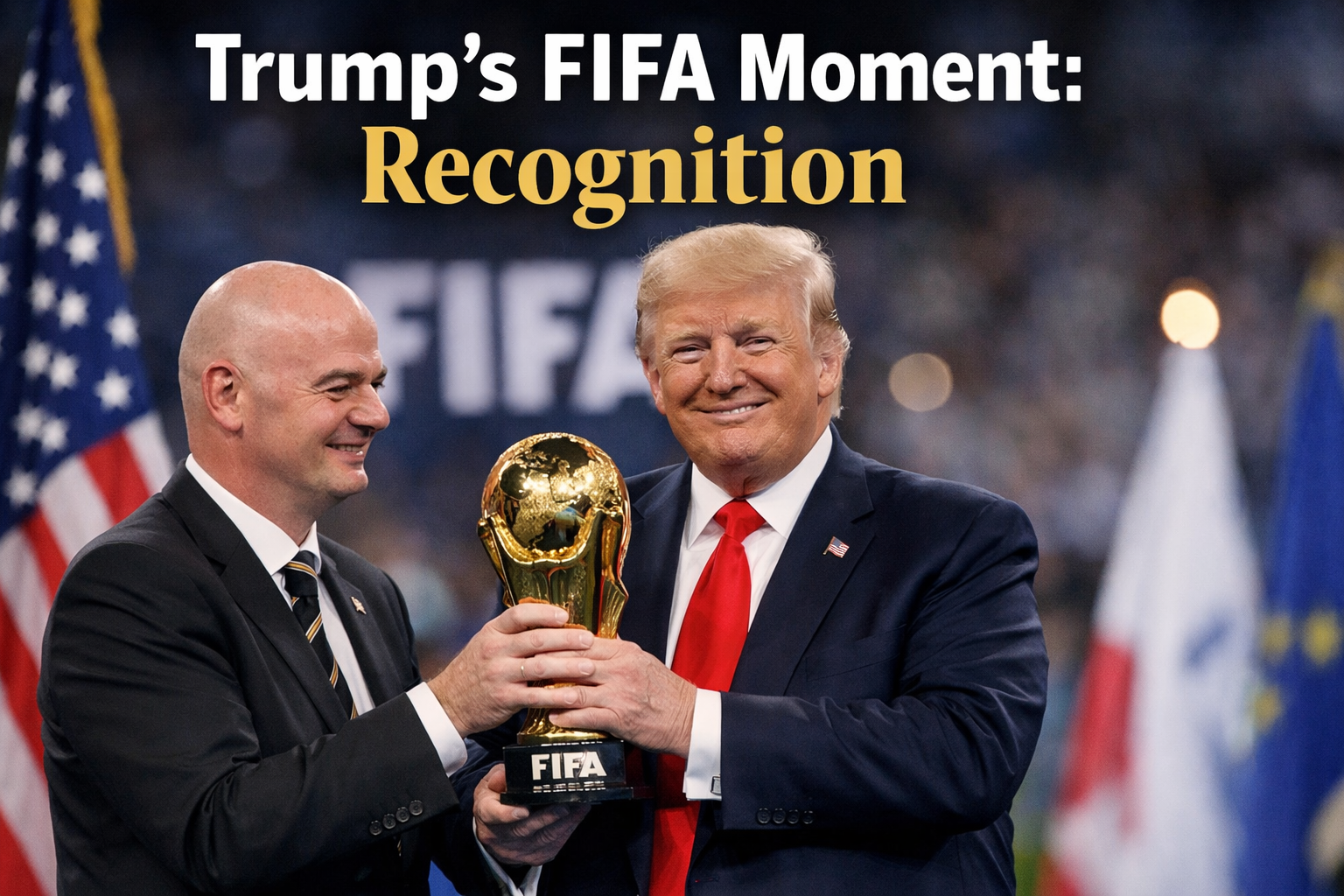
Football and politics have always shared a complex relationship. When world leaders clash with global sporting events, the spotlight becomes even brighter. One such moment came when former US President Donald Trump was associated with the growing momentum of the 2026 FIFA World Cup, which would be hosted by the United States, Canada and Mexico.
This “FIFA moment” wasn’t just about football. It was about recognition, response and the reality of sports diplomacy in a politically divided world.
Table of Contents
1. The Road to 2026: How It All Began
The journey to hosting the 2026 World Cup began with a competitive bidding process overseen by FIFA. In 2018, the joint North American bid defeated Morocco, marking the first time three nations would co-host a FIFA World Cup.
At the time, Trump was President of the United States. His administration publicly supported the bid, promoting it as an opportunity for economic growth, global recognition, and diplomatic cooperation.
Political Backing and Global Lobbying
Reports indicated that U.S. political influence played a role in strengthening the bid. While FIFA officially evaluates bids based on infrastructure, stadium readiness, and commercial viability, political endorsement often adds weight.
Trump’s message was clear: Hosting the World Cup would reaffirm America’s global standing.
2. Recognition: A Strategic Sports Diplomacy Move
America’s Global Rebranding
For decades, soccer (football) has been considered a secondary sport in the United States compared to the NFL or NBA. Hosting the 2026 World Cup is a strategic move to elevate soccer’s status domestically.
Trump’s recognition of the tournament was seen by supporters as a bold diplomatic gesture — positioning the U.S. at the center of the world’s most-watched sporting event.
Economic Promise
The 2026 World Cup is expected to:
- Generate billions in revenue
- Boost tourism across North America
- Create thousands of temporary jobs
- Strengthen infrastructure
Major American cities like New York, Los Angeles, and Dallas are preparing for global attention. The tournament will feature 48 teams — the largest in history — making it the most expansive World Cup ever.
3. Reaction: Mixed Global and Domestic Responses
Whenever Trump is involved, reactions tend to be polarized.
Supporters’ Perspective
Supporters argue:
- The administration’s backing helped secure the bid.
- Hosting strengthens North American unity.
- It showcases the U.S. as capable of organizing massive global events.
For them, this was leadership in action.
Critics’ Perspective
Critics highlighted:
- Tensions in U.S.-Mexico relations during that period.
- Immigration policies that seemed contradictory to a global celebration.
- Political overtones overshadowing sport.
Some questioned whether political rhetoric aligned with FIFA’s message of unity and inclusivity.
4. Reality: Politics and Football Are Inseparable
Throughout history, politics and football have intersected repeatedly:
- The 1934 and 1938 tournaments under Mussolini’s Italy
- Argentina’s 1978 World Cup during military rule
- Russia 2018 amid geopolitical tensions
Global tournaments often serve as stages for political messaging.
Trump’s FIFA moment fits into this tradition — where sports become symbols of national identity and international diplomacy.
5. The North American Partnership
One of the most remarkable aspects of the 2026 World Cup is its joint-host format.
Despite political tensions, the partnership between the United States, Canada, and Mexico demonstrates:
- Regional cooperation
- Shared economic goals
- Cross-border unity through sport
This collaboration reflects a broader reality: Football can transcend political divides.
6. The Business of the Beautiful Game
The World Cup is not only a sporting event — it is a massive commercial enterprise.
Under expanded participation:
- More matches
- More broadcasting rights
- More sponsorship deals
- Greater global engagement
For American investors and corporations, this represents a huge business opportunity.
Trump, known for his business background, framed the tournament as an economic win.
7. Global Image and Soft Power
Hosting a World Cup enhances a nation’s soft power — the ability to influence others through culture rather than force.
The United States hosting 2026 will:
- Showcase modern stadiums
- Highlight cultural diversity
- Promote tourism
- Reinforce diplomatic relationships
Trump’s public recognition of the event positioned it as a milestone for American global image-building.
8. Will Politics Overshadow the Game?
One major question remains: Will political narratives overshadow the football?
Historically, once the tournament begins, the sport takes center stage. Fans focus on:
- Star players
- Dramatic goals
- Emotional storylines
- National pride
By kickoff, politics often fades into the background — replaced by pure sporting passion.
Conclusion: Recognition, Reaction, and Reality
Trump’s FIFA moment represents more than a headline. It symbolizes:
- The merging of sports and political identity
- The economic ambitions of global tournaments
- The power of football as diplomatic currency
Recognition brought attention.
Reaction revealed division.
Reality reminds us that football remains bigger than politics.
Did Donald Trump directly secure the 2026 World Cup for the United States?
While his administration supported the bid, the final decision was made by FIFA members through a voting process.
Why is the 2026 World Cup historically significant?
It will be the first tournament hosted by three countries and the first to feature 48 teams.
How does politics influence FIFA tournaments?
Governments often support bids, provide infrastructure funding, and use events for diplomatic messaging.
What economic impact is expected from the 2026 World Cup?
Billions in tourism revenue, job creation, and increased global visibility for host cities.
Could political tensions affect the tournament?
While political discussions may continue, FIFA events traditionally focus on sport once the competition begins.