Inside the Decision: Why FIFA Presented an Award to Donald Trump
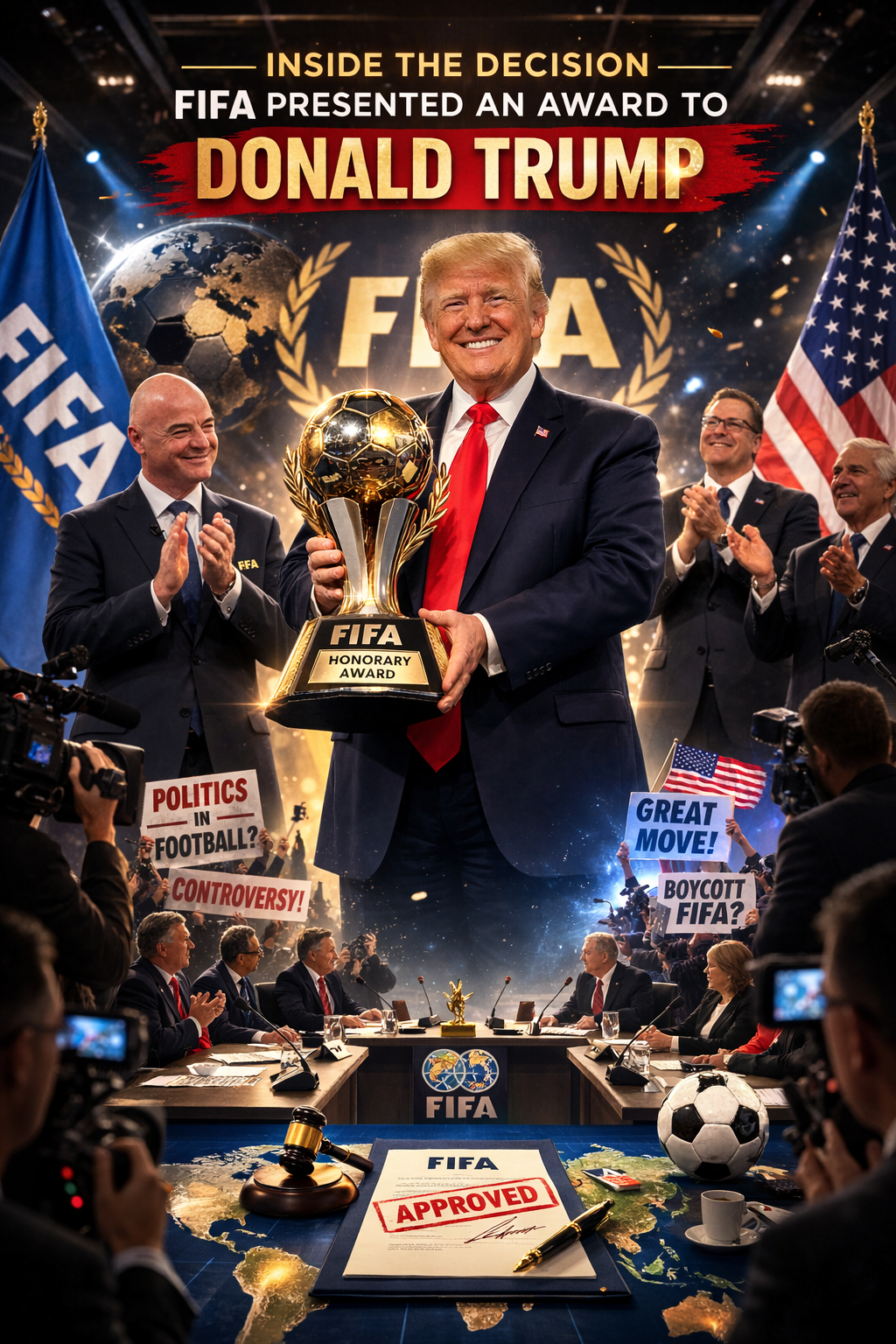
When news broke that Donald Trump had received a FIFA-related recognition, reactions ranged from surprise to skepticism. Why would a world football governing body honor a political leader? Was it about sports, diplomacy, economics — or all three?
To understand the whole story, we need to look at FIFA’s decision-making process and examine how global tournaments like the 2026 FIFA World Cup are awarded and organized.
Table of Contents
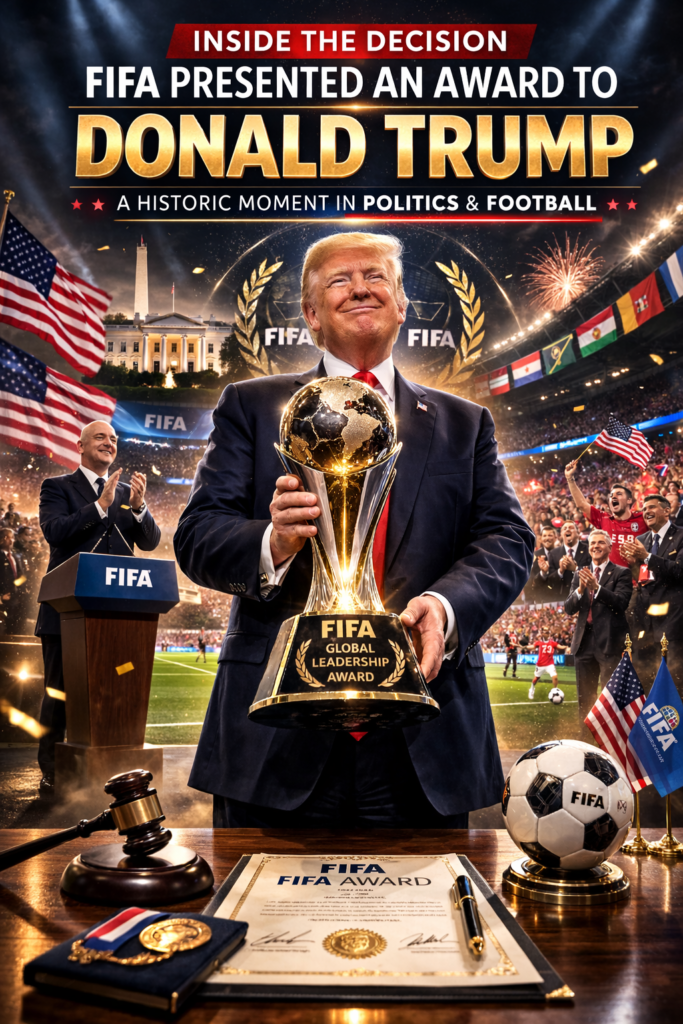
1. Clarifying the “Award”
First, let’s establish what this award was — and what it was not.
It was not:
- A Golden Ball
- A coaching honor
- A player achievement trophy
Instead, the recognition connected to Trump was linked to the successful North American bid for the 2026 World Cup.
In global sports governance, such acknowledgments are often symbolic. They recognize the role of national leadership in facilitating hosting agreements rather than rewarding athletic performance.
2. The 2026 World Cup Bid: A Historic Moment
In 2018, FIFA’s voting members selected a joint bid from:
- United States
- Canada
- Mexico
This decision was historic for several reasons:
- First tournament hosted by three countries
- First World Cup expanded to 48 teams
- Largest commercial and logistical event in FIFA history
At the time of the vote, Trump was serving as U.S. President. His administration formally backed the bid, providing governmental guarantees required by FIFA.
3. Why FIFA Requires Political Backing
FIFA does not award World Cup hosting rights based solely on stadium quality. Government cooperation is essential because organizing the tournament requires:
Security Infrastructure
National governments must coordinate police, intelligence agencies, and emergency services.
Visa and Border Policies
Teams, fans, sponsors, and journalists from around the world need entry clearance.
Tax and Financial Guarantees
FIFA requires clarity on taxation, commercial rights, and revenue protections.
Infrastructure Commitments
Airports, transportation systems, and communication networks often need upgrades.
Trump’s administration confirmed that the U.S. government would support these requirements — strengthening the North American bid.
4. The Political Climate at the Time
The recognition became controversial partly because of the broader political atmosphere.
During Trump’s presidency:
- U.S.-Mexico relations were under intense scrutiny.
- Immigration policies were globally debated.
- Political polarization was high domestically and internationally.
Yet despite tensions, the joint bid between the United States, Canada, and Mexico symbolized regional cooperation.
This contrast made the FIFA acknowledgment both symbolic and politically charged.
5. Supporters vs. Critics: Two Perspectives
Supporters’ View
Supporters argue that:
- The administration’s backing was crucial for securing the bid.
- Hosting the World Cup will generate billions in economic activity.
- Recognition was standard diplomatic protocol.
They see it as a normal acknowledgment of government involvement.
Critics’ View
Critics suggest:
- Sports and politics should remain separate.
- FIFA’s relationship with political leaders raises governance concerns.
- The recognition amplified political narratives around a sporting event.
This debate reflects a broader global tension between sport and state power.
6. Historical Precedent: Politics in Global Sport
This situation is not unique.
Throughout history:
- Olympic hosts often credit heads of state for winning bids.
- Political leaders attend World Cup openings and finals.
- Governments invest billions to secure global events.
International sporting organizations routinely acknowledge the political leadership that enables large-scale events.
Trump’s FIFA moment fits into this established pattern of symbolic recognition.
7. The Economics Behind the Recognition
The 2026 World Cup is projected to:
- Host over 100 matches
- Attract millions of international visitors
- Generate massive broadcasting and sponsorship revenue
- Boost tourism and infrastructure development
The United States will host the majority of matches, including major knockout fixtures.
For any administration, securing such an event can be framed as:
- An economic achievement
- A diplomatic milestone
- A strategic branding victory
Recognition in this context reflects the scale of political involvement required.
8. The Real Decision Inside FIFA
So why did FIFA present recognition to Donald Trump?
Because:
- The U.S. government provided formal guarantees for the 2026 bid.
- Political endorsement strengthened international confidence.
- Hosting a World Cup requires high-level diplomatic cooperation.
The acknowledgment was institutional, not athletic.
It was about enabling the event — not playing the game.
9. The Bigger Picture: Where Sport and Statecraft Intersect
Global tournaments are more than competitions.
They are:
- Diplomatic platforms
- Economic engines
- Cultural showcases
- Symbols of national pride
When political leaders become part of that story, recognition often follows — especially when their support directly influences hosting outcomes.
Conclusion
Inside the decision to present a FIFA-related award to Donald Trump lies a straightforward reality:
It was a symbolic acknowledgment of government support during the successful 2026 World Cup bid.
While public reactions varied, the core reason was administrative and diplomatic — not athletic.
As the 2026 tournament approaches, the spotlight will move from political headlines to football heroes. But behind every World Cup lies a foundation of political negotiation and government commitment.
Did Donald Trump win a football trophy from FIFA?
No. The recognition was related to government support for hosting the 2026 World Cup.
Why does FIFA recognize political leaders?
Because hosting a World Cup requires government guarantees, infrastructure planning, and diplomatic coordination.
Was this recognition unusual?
No. Political leaders are often acknowledged when they play a role in securing major sporting events.
Did politics influence the 2026 World Cup decision?
FIFA members voted officially. Political backing strengthened the bid but infrastructure and financial strength were key factors.
What makes the 2026 World Cup historic?
It will be the first 48-team tournament and the first hosted by three countries.