FIFA Explained: Meaning, Origin, and Why It Matters in World Football
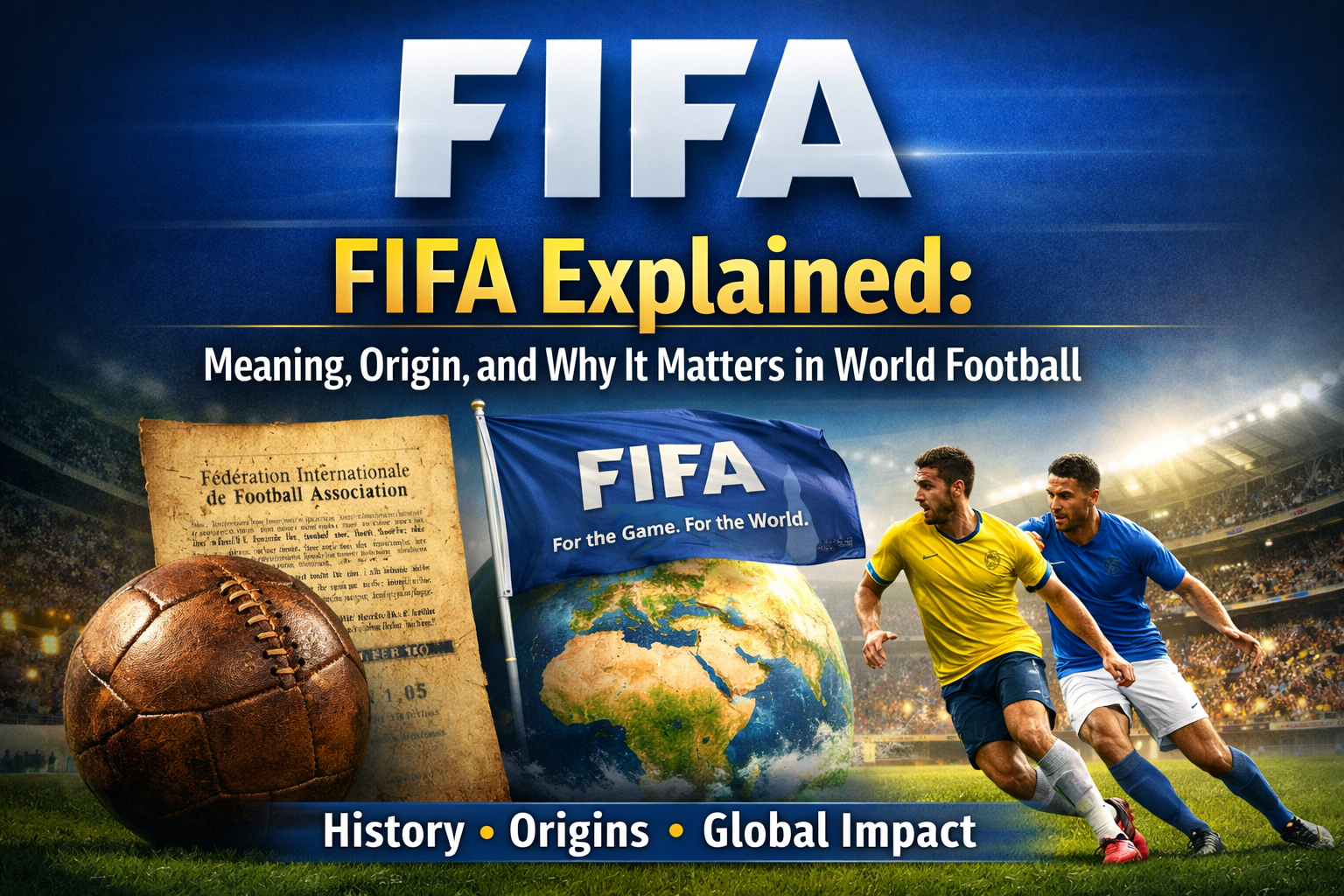
Soccer, called soccer in some countries, is the most popular sport on the planet. At the center of this global game is one powerful organization: FIFA. Whether it’s the excitement of the World Cup, the drama of international rivalries, or the rules that govern professional competition, FIFA plays a defining role in shaping modern football.
But what exactly is FIFA? Where does it come from? And why does it matter so much in world football?
Table of Contents
What Does FIFA Mean?
FIFA stands for Fédération Internationale de Football Association, which translates from French to International Federation of Association Football.
The name reflects:
- Fédération Internationale – International Federation
- Football Association – The formal term for organized football (soccer)
Interestingly, FIFA uses the French acronym because it was founded in a French-speaking environment, and French was one of the dominant diplomatic languages at the time.
The Origin of FIFA
FIFA was founded on May 21, 1904, in Paris, France.
Founding Members
The original member nations included:
- France
- Belgium
- Denmark
- Netherlands
- Spain (represented by Madrid FC)
- Sweden
- Switzerland
These countries aimed to create a unified international governing body for football competitions.
At that time, football was growing rapidly across Europe, but there was no central authority to regulate international matches. FIFA was created to:
- Standardize rules
- Organize international competitions
- Promote cooperation between national football associations
Over time, FIFA expanded far beyond Europe and became a truly global organization.
FIFA’s Structure and Governance
FIFA is headquartered in Zurich, Switzerland.
Key Components of FIFA’s Structure:
- FIFA Congress
The supreme legislative body, made up of representatives from all member associations. - FIFA Council
Responsible for strategic decisions and governance between Congress meetings. - The President
The highest-ranking official who oversees FIFA’s operations. - Six Continental Confederations
- UEFA (Europe)
- CONMEBOL (South America)
- CONCACAF (North & Central America)
- CAF (Africa)
- AFC (Asia)
- OFC (Oceania)
Today, FIFA has 211 member associations, making it larger than the United Nations in terms of membership.
FIFA’s Most Important Tournament: The World Cup
The crown jewel of FIFA is the FIFA World Cup.
First held in 1930 in Uruguay, the tournament has grown into the most watched sporting event in the world.
Why the World Cup Matters:
- It unites billions of fans globally.
- It generates massive economic revenue.
- It elevates players into global icons.
- It strengthens national identity.
The tournament occurs every four years and has become the pinnacle of achievement in football.
In addition to the men’s tournament, FIFA also organizes:
- FIFA Women’s World Cup
- FIFA Club World Cup
- Youth competitions (U-17, U-20)
- Futsal and Beach Soccer World Cups
FIFA’s Role in World Football
FIFA’s influence goes far beyond organizing tournaments.
1. Rule Regulation
FIFA works with the International Football Association Board (IFAB) to standardize the laws of the game.
2. Development Programs
Through funding and development initiatives, FIFA supports:
- Grassroots football
- Infrastructure projects
- Coaching education
- Women’s football growth
3. Global Unity
FIFA creates a platform where countries compete peacefully, promoting cultural exchange and diplomacy through sport.
4. Commercial Power
FIFA negotiates broadcasting rights, sponsorship deals, and marketing partnerships that generate billions in revenue.
Economic and Cultural Impact
FIFA events significantly affect host countries:
Economic Effects:
- Infrastructure development
- Tourism growth
- Job creation
- Global branding exposure
Cultural Impact:
- National pride
- Cultural representation
- Global storytelling through sport
The World Cup, in particular, becomes a global cultural moment every four years.
Controversies and Criticism
Despite its influence, FIFA has faced major controversies.
Governance Issues
FIFA has been criticized for:
- Corruption scandals
- Lack of transparency
- Questionable bidding processes for World Cup hosting
Several high-profile investigations over the past decade have damaged FIFA’s reputation and led to internal reforms.
Human Rights Concerns
Host nation selections have sometimes raised concerns about:
- Labor rights
- Political freedoms
- Infrastructure ethics
These controversies have sparked debates about accountability in global sports governance.
Why FIFA Still Matters
Even with criticism, FIFA remains central to world football.
Reasons It Matters:
- Global Authority
No other body regulates international football at FIFA’s scale. - Cultural Influence
It shapes how the world experiences the sport. - Economic Engine
Billions of dollars flow through its competitions. - Platform for Unity
Football becomes a universal language under FIFA’s structure.
Without FIFA, international football would lack coordination, uniform standards, and global tournaments at this level.
The Future of FIFA
FIFA continues to evolve:
- Expansion of the World Cup format
- Growth of women’s football
- Increased digital engagement
- Greater financial transparency efforts
As football becomes even more globalized, FIFA’s influence is expected to grow further.
Conclusion
FIFA is more than just an acronym. It is the backbone of international football—a powerful organization that shapes rules, organizes tournaments, and connects nations through the world’s most beloved sport.
From its modest beginnings in 1904 to its current status as a global powerhouse, FIFA has transformed football into a unifying global spectacle.
Love it or criticize it, FIFA remains central to the story of world football.
What does FIFA stand for?
FIFA stands for Fédération Internationale de Football Association (International Federation of Association Football).
When was FIFA founded?
FIFA was founded on May 21, 1904, in Paris, France.
How many countries are members of FIFA?
FIFA has 211 member associations worldwide.
What is FIFA’s biggest tournament?
The FIFA World Cup is its most prestigious and widely watched tournament.
Where is FIFA headquartered?
FIFA’s headquarters are located in Zurich, Switzerland.
What does FIFA do besides organizing the World Cup?
FIFA regulates international football, funds development programs, supports grassroots initiatives, and governs global competitions.
Why is FIFA sometimes criticized?
FIFA has faced criticism for corruption scandals, governance issues, and controversial World Cup hosting decisions.