
How Professional Athletes Train: Secrets Behind Championship Success
Becoming a professional athlete isn’t just about natural talent. Behind every championship win are years of discipline, structured training, mental strength and relentless dedication. From intense gym sessions to advanced recovery techniques, professional athletes follow highly specialized routines designed to maximize their performance.
Athletes participating in global tournaments such as the Olympics, FIFA World Cup or ICC Cricket World Cup train daily to maintain peak physical and mental condition.
Table of Contents
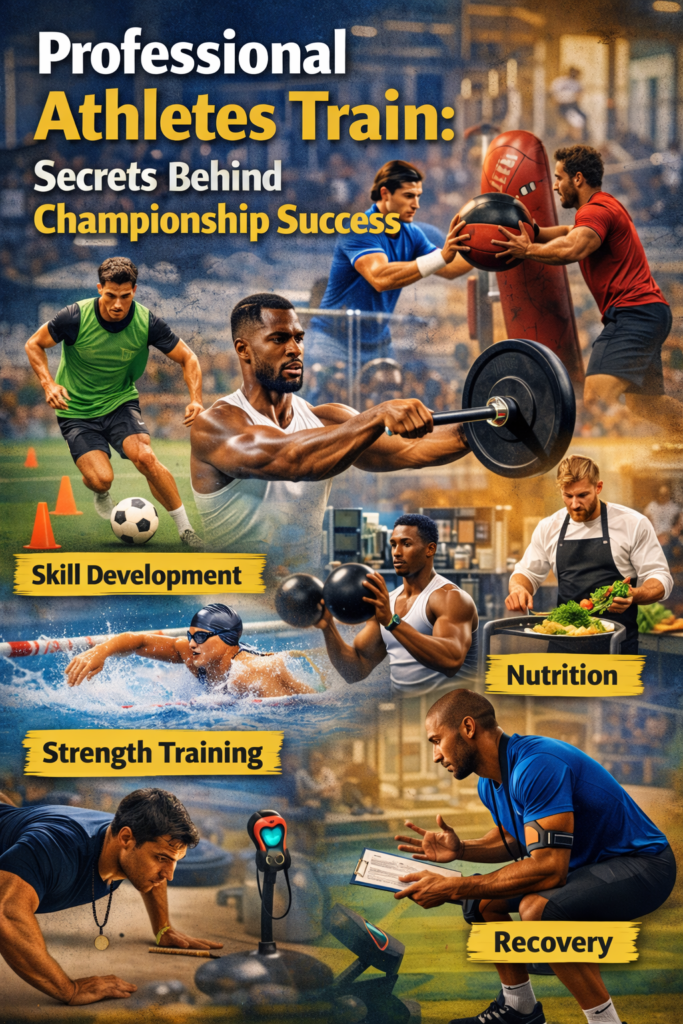
The Mindset of Championship Athletes
Before physical training even begins, professional athletes develop a strong mental foundation. The difference between good athletes and champions often lies in their mindset.
Elite competitors like Cristiano Ronaldo, Serena Williams, and Michael Phelps are known for their incredible discipline and dedication.
Key Mental Traits of Champions
- Consistency in daily training
- Strong focus and concentration
- Resilience after defeat
- Goal-oriented mindset
- Competitive drive
Mental toughness allows athletes to perform under pressure during crucial moments in major competitions.
Strength and Conditioning Training
Strength and conditioning are essential for improving power, endurance, and injury prevention. Most professional athletes train in the gym for several hours every week.
Common Strength Training Methods
Weight Training
Athletes use exercises such as squats, deadlifts, and bench presses to build overall power.
Explosive Training
Exercises like box jumps and sprints improve speed and agility.
Core Strength
Strong core muscles help athletes maintain balance and stability during competition.
Many athletes also incorporate workouts such as High-Intensity Interval Training to increase stamina and cardiovascular endurance.
Sport-Specific Training
Every sport requires unique skills, techniques, and strategies. Professional athletes spend significant time practicing sport-specific drills.
For example:
- Football players improve ball control and passing accuracy.
- Cricket players practice batting techniques and bowling variations.
- Basketball players train shooting precision and defensive movements.
Stars like LeBron James spend hours perfecting shooting mechanics, while cricketers like Virat Kohli focus on batting technique and match awareness.
Sport-specific training ensures that athletes perform efficiently in real-game situations.
Endurance and Cardio Training
Endurance training helps athletes maintain energy throughout long matches or competitions.
Common endurance workouts include:
- Long-distance running
- Cycling
- Swimming
- Rowing machines
- Sprint intervals
Olympic swimmers like Michael Phelps famously trained multiple hours every day to build extraordinary stamina.
Cardio workouts strengthen the heart, improve oxygen delivery to muscles, and increase overall performance.
Recovery and Injury Prevention
Training hard is important, but recovery is just as critical for success. Without proper recovery, athletes risk fatigue, burnout, and injuries.
Professional athletes follow strict recovery protocols including:
1. Sleep Optimization
Most elite athletes aim for 8–10 hours of sleep per night.
2. Physiotherapy
Massage therapy and physical therapy help maintain muscle health.
3. Ice Baths
Cold therapy reduces inflammation after intense workouts.
4. Stretching and Mobility
Exercises like Yoga improve flexibility and reduce injury risk.
Many top teams employ full-time sports physiotherapists and recovery specialists.
Nutrition and Diet Plans
Nutrition plays a huge role in athletic performance. Professional athletes follow personalized diets designed by sports nutritionists.
Key Elements of an Athlete’s Diet
Protein
Supports muscle repair and growth.
Carbohydrates
Provide energy for training and competition.
Healthy Fats
Support hormone balance and long-term energy.
Hydration
Maintains body temperature and endurance.
Athletes often track calorie intake and meal timing to optimize performance.
For example, Cristiano Ronaldo is known for his disciplined diet focused on lean protein, vegetables, and hydration.
Technology in Modern Athlete Training
Modern sports training now relies heavily on technology and data analytics.
Athletes and coaches use tools such as:
- Wearable fitness trackers
- Motion analysis systems
- GPS performance tracking
- AI-driven analytics
These technologies allow teams to analyze performance metrics like speed, heart rate, and fatigue levels.
Data-driven training helps athletes make smarter adjustments to improve performance.
Mental Training and Psychology
Mental preparation is just as important as physical conditioning. Many professional athletes work with sports psychologists to improve focus and emotional control.
Common mental training methods include:
- Visualization techniques
- Meditation and mindfulness
- Stress management exercises
- Performance psychology coaching
These techniques help athletes stay calm during high-pressure moments in major competitions.
Daily Routine of Professional Athletes
A typical day for a professional athlete might include:
Morning
- Strength training session
- Sport-specific practice
Afternoon
- Tactical training with coaches
- Video analysis of previous games
Evening
- Recovery sessions
- Stretching and mobility work
This structured schedule ensures athletes constantly improve their skills and fitness.
Lessons from Championship Athletes
Professional athletes teach us several valuable lessons that apply beyond sports.
1. Discipline Beats Talent
Consistent hard work often matters more than natural ability.
2. Continuous Improvement
Elite athletes always look for ways to improve.
3. Strong Mental Focus
Success requires emotional control and resilience.
4. Teamwork Matters
Even individual sports rely on coaches and support teams.
These lessons inspire millions of fans around the world.
Conclusion
The journey to championship success requires far more than talent. Professional athletes dedicate their lives to rigorous training, proper nutrition, mental preparation, and constant improvement.
Whether competing in the Olympic Games, the FIFA World Cup, or the ICC Cricket World Cup, elite athletes push their bodies and minds to extraordinary limits.
Their commitment, discipline, and passion continue to inspire future generations of athletes worldwide.
How many hours do professional athletes train daily?
Most professional athletes train 4 to 6 hours per day, including gym workouts, skill training, and recovery sessions.
What type of training is most important for athletes?
A combination of strength training, endurance training, skill practice, and mental preparation is essential for peak performance.
How important is diet for professional athletes?
Diet is extremely important. Proper nutrition fuels workouts, improves recovery, and enhances overall athletic performance.
Do professional athletes train every day?
Many athletes train almost daily, but they include rest and recovery days to prevent injuries and maintain peak condition.
How do athletes stay mentally strong during competitions?
Athletes use techniques such as visualization, meditation, and sports psychology training to stay focused under pressure.