Can Europe Dominate Again? FIFA World Cup 2026 Preview & Analysis
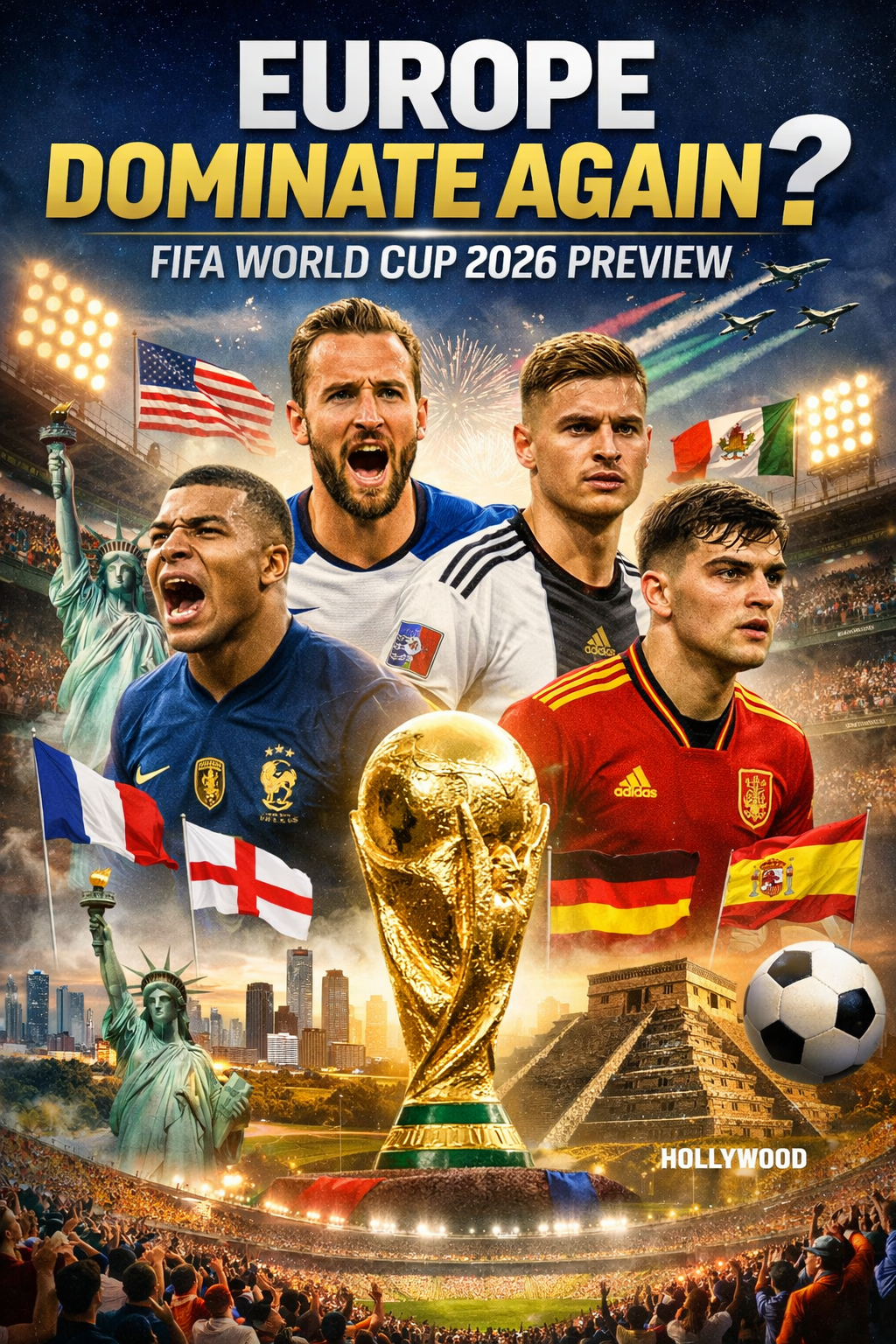
After European nations lifted the trophy in 2006, 2010, 2014 and 2018, their grip was finally broken in 2022 when Argentina triumphed. Now, as the soccer world turns its attention to the historic 2026 edition — hosted in the U.S., Canada and Mexico — the battle for world supremacy is intensifying once again.
With an expanded 48-team format, tactical evolution and a new generation of superstars emerging, Europe enters the tournament with depth, experience and hunger. But is that enough?
Let’s break it down in deep analysis format — including strengths, weaknesses, tactical trends, and key Q&A insights.
Table of Contents
Why Europe Has Dominated in the Modern Era
European football’s dominance in the 21st century has not been accidental. It is built on structure, investment, and tactical sophistication.
1️⃣ Strong Domestic Leagues
Leagues like:
- Premier League
- La Liga
- Bundesliga
- Serie A
These leagues provide elite competition weekly. Players face high-pressure matches regularly, sharpening their tactical and mental resilience.
2️⃣ Tactical Innovation
From high pressing (Germany 2014) to positional dominance (Spain 2010) to structured counter-attacks (France 2018), Europe constantly reinvents football strategies.
3️⃣ Squad Depth
European nations can field two competitive XIs. Injuries rarely collapse their campaign.
Strongest European Contenders for 2026
France – Built for Another Era
France arguably remains the most complete European team. With stars like Kylian Mbappé entering his prime, and a new generation emerging, their squad depth is frightening.
Strengths:
- Explosive pace in attack
- Tactical adaptability
- Big-tournament mentality
Concern: Defensive stability under pressure.
England – Golden Generation 2.0?
England’s young core continues to mature. If leadership and mental toughness align, 2026 could be their moment.
Strengths:
- Creative midfield options
- Wide attacking threats
- Tournament experience
Concern: Handling knockout-stage pressure.
Germany – Tactical Rebuild
After disappointing recent tournaments, Germany is rebuilding aggressively.
Strengths:
- Structured system
- Emerging young talents
- Strong pressing game
Concern: Consistency in big matches.
Spain – Possession Meets Youth
Spain’s transition toward dynamic, faster football makes them dangerous again.
Strengths:
- Ball control
- High technical quality
- Young midfield stars
Concern: Clinical finishing.
The Global Threat to Europe
Europe won’t have it easy.
Argentina
The reigning champions carry confidence and tactical maturity.
Brazil
Always loaded with talent and flair.
Uruguay
Rising with youthful aggression.
Morocco
Proved in 2022 that defensive structure + discipline can shock Europe.
The gap between continents is shrinking.
Key Tactical Trends for 2026
- High-intensity pressing with controlled buildup
- Versatile full-backs acting as midfielders
- Data-driven player management
- Hybrid formations (3-2-4-1 variations)
European teams are generally ahead in tactical evolution — but South American creativity remains unpredictable.
Expanded 48-Team Format – Advantage or Risk for Europe?
The new format means:
- More matches
- Greater squad rotation importance
- Higher chance of upsets
This could actually favor Europe because of their deeper benches. However, fatigue may level the playing field.
Psychological Factor
Winning tournaments is not just about talent.
Europe traditionally thrives under:
- Structured preparation
- Strong federation systems
- Tactical discipline
But South American teams often bring emotional intensity that changes games.
Final Prediction
Europe will almost certainly place multiple teams in the quarterfinals and semifinals. But total dominance — as in 2018 — is far from guaranteed.
The world of football is evolving. Talent is global. Structure meets flair. Discipline meets passion.
Will Europe dominate again?
They have the depths, systems, and stars.
But in 2026, dominance will not be given — it will be fought for.
Is Europe still the strongest football continent?
Yes, in terms of depth and competitive leagues. However, the margin is much smaller than a decade ago.
Which European team has the best chance in 2026?
France appears the most balanced, but England and Spain are strong challengers depending on squad form.
Does the 48-team format help European teams?
Likely yes. Their depth and conditioning programs allow better rotation across more matches.
Can South America break European dominance again?
Absolutely. Argentina and Brazil have world-class individuals capable of changing games single-handedly.
What is Europe’s biggest weakness heading into 2026?
Over-reliance on systems. Sometimes too much structure reduces improvisation against unpredictable opponents.