
The Evolution of Modern Sports: From Tradition to Technology
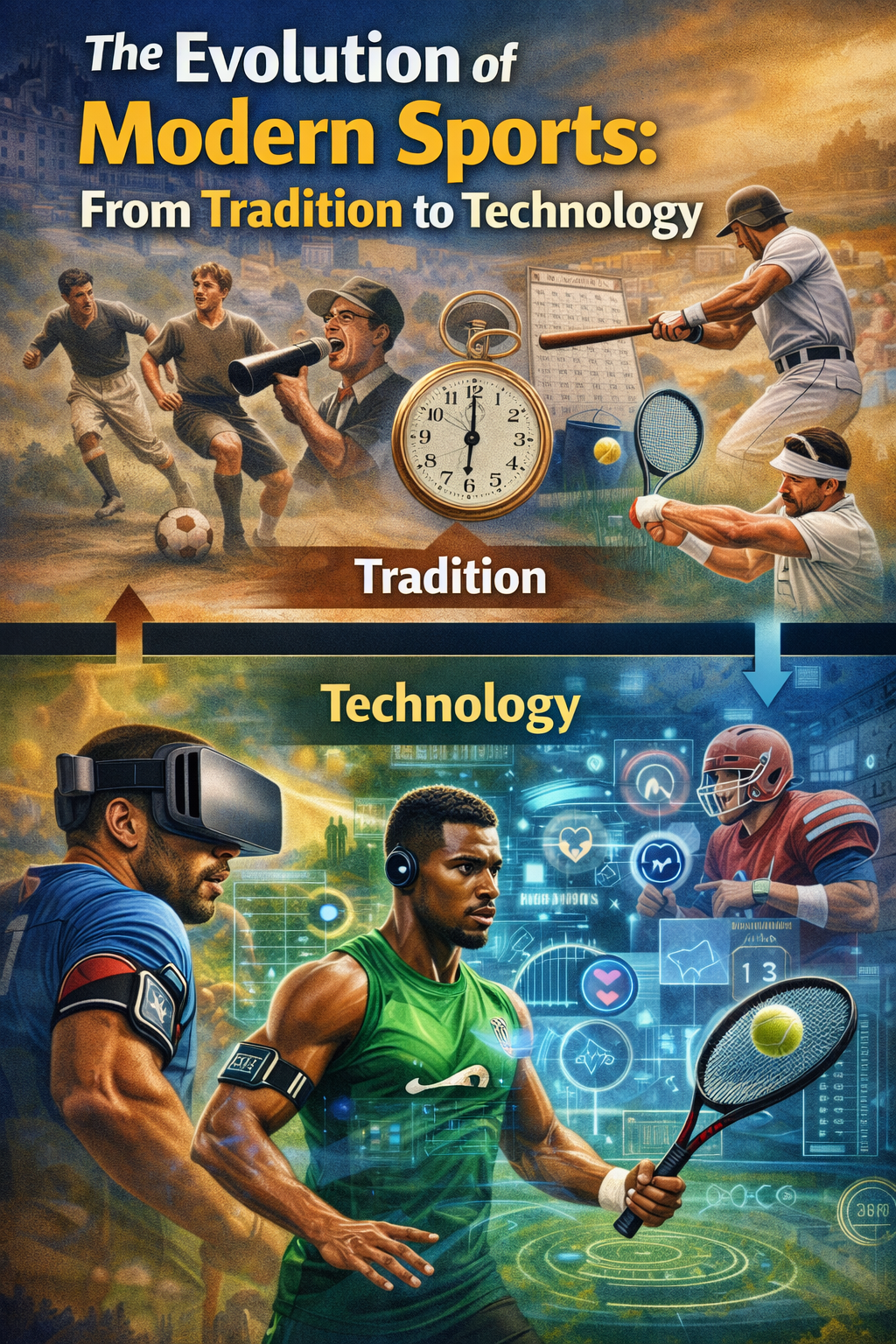
Sport has been an essential part of human civilization for thousands of years. What started as simple physical contests in ancient societies has transformed into a massive global industry powered by science, technology and global media coverage. Today, modern sports combine tradition with innovation to create experiences that captivate billions of fans around the world.
From ancient tournaments like the Ancient Olympics to modern global spectacles like the Olympics and the FIFA World Cup, the journey of sports reflects humanity’s passion for competition, entertainment and progress.
Table of Contents
The Origins of Sports in Ancient Civilizations
Sports have existed for thousands of years, often connected to culture, religion, and military training.
Ancient civilizations such as Ancient Greece, Ancient Rome, and Ancient China organized athletic competitions to celebrate physical excellence and community spirit.
One of the most famous early sporting events was the Ancient Olympic Games, first held in 776 BC in Greece. Athletes competed in events such as running, wrestling, and chariot racing.
Key Characteristics of Ancient Sports
- Limited equipment and simple rules
- Strong cultural and religious connections
- Local competitions rather than global events
- Focus on physical strength and endurance
These early competitions laid the foundation for the modern sports culture we see today.
The Rise of Organized Sports in the 19th Century
The modern structure of sports began developing during the 19th century when formal rules, leagues, and governing bodies were established.
Sports such as Association Football, Cricket, and Rugby Union were standardized with official regulations and international competitions.
For example, the International Olympic Committee revived the modern Olympic Games in 1896, creating a global platform for athletic competition.
Impact of Organized Sports
- Creation of official leagues and tournaments
- Standardized rules and regulations
- Professional athletes emerging as global icons
- Expansion of international competitions
This period transformed sports from informal activities into structured global institutions.
The Globalization of Sports
During the 20th century, sports expanded rapidly across continents. International competitions became symbols of national pride and cultural identity.
Events like the FIFA World Cup and the ICC Cricket World Cup gained massive global audiences.
Athletes such as Pelé, Sachin Tendulkar, and Michael Jordan helped popularize their sports internationally.
Factors Behind Global Sports Growth
- International tournaments
- Global media broadcasting
- Sponsorship and commercialization
- Rising popularity of professional leagues
Sports gradually became a multi-billion-dollar global entertainment industry.
The Impact of Television and Media
Television revolutionized the way fans experienced sports. For the first time, people could watch live matches from anywhere in the world.
Major sporting events now attract billions of viewers globally.
For example:
- The FIFA World Cup is one of the most-watched sporting events in history.
- The Olympic Games bring together athletes from more than 200 nations.
Media coverage helped turn athletes into global celebrities and significantly increased the commercial value of sports.
Technology Transforming Modern Sports
In the 21st century, technology has completely transformed sports performance, officiating, and fan engagement.
1. Video Assistant Referee (VAR)
In football, systems like Video Assistant Referee help referees review critical decisions during matches.
This technology improves fairness and accuracy in important game moments.
2. Hawk-Eye Technology
Sports like Tennis and Cricket use Hawk-Eye systems to track ball trajectories and determine whether a ball is in or out.
This innovation has reduced human error and improved decision-making.
3. Wearable Performance Technology
Modern athletes now train with wearable devices that monitor:
- Heart rate
- Speed
- Distance covered
- Fatigue levels
These tools help coaches analyze player performance and prevent injuries.
4. Data Analytics and Artificial Intelligence
Advanced data analytics now influence coaching strategies, player scouting, and game tactics.
Teams analyze large datasets to understand performance patterns and optimize training.
This analytical approach has become a key part of professional sports.
The Rise of Esports
Another major development in modern sports is the rise of Esports competitions.
Video game tournaments now attract millions of viewers worldwide and offer massive prize pools.
Popular esports games include titles like League of Legends and Dota 2.
While traditional sports rely on physical performance, esports focus on reaction speed, strategy, and teamwork.
The Future of Sports Technology
Sports will continue evolving as new technologies emerge.
Possible innovations include:
- Virtual reality stadium experiences
- AI-powered coaching systems
- Advanced injury prevention tools
- Smart stadiums with immersive fan experiences
These innovations will transform how athletes train and how fans watch their favorite sports.
Balancing Tradition and Innovation
Despite technological advancements, the core spirit of sports remains unchanged: competition, teamwork, and passion.
Traditional sporting values such as fair play, dedication, and respect continue to define athletics worldwide.
Even with modern innovations, the emotional excitement of live sports remains timeless.
Conclusion
The evolution of sports from ancient traditions to modern technological spectacles reflects humanity’s continuous pursuit of excellence and entertainment.
From the historic Ancient Olympic Games to global tournaments like the FIFA World Cup, sports have transformed dramatically while preserving their core spirit.
With innovations like Hawk-Eye, Video Assistant Referee, and advanced performance analytics, the future of sports promises to be even more exciting.
As technology continues to advance, sports will evolve further—bringing fans closer to the action and pushing athletes to achieve new heights of performance.
How have sports evolved over time?
Sports evolved from simple physical competitions in ancient civilizations to highly organized global events supported by advanced technology and media coverage.
What role does technology play in modern sports?
Technology improves performance analysis, decision-making, injury prevention, and fan engagement through tools like Hawk-Eye and Video Assistant Referee.
What are the most influential global sports events?
Major global sporting events include the Olympic Games, FIFA World Cup, and ICC Cricket World Cup.
What is the future of sports technology?
Future innovations may include virtual reality viewing, AI-driven coaching systems, and smart stadium experiences.
Are esports considered real sports?
Many experts consider Esports a modern form of competitive sport because it requires skill, strategy, and professional competition.