FIFA World Cup 2026: The Ultimate Battle for Global Football Glory
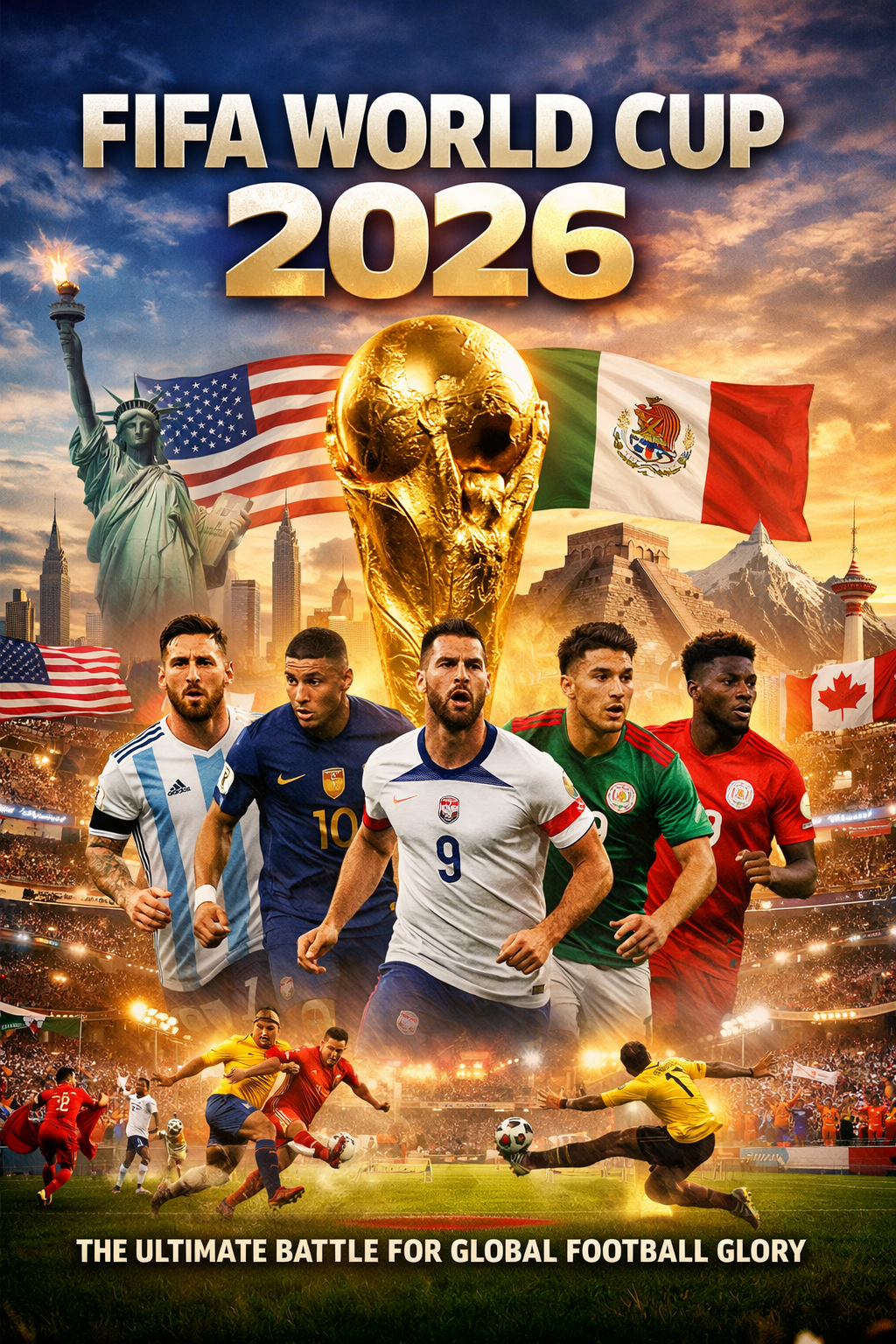
The world’s biggest sports festival is ready to return in historic fashion. The 2026 FIFA World Cup will not just be another edition of soccer’s biggest tournament — it will redefine the global stage. For the first time ever, 48 teams will compete in three host countries: the United States, Canada and Mexico.
From legendary soccer nations to emerging powerhouses, from tactical masterminds to fearless young superstars — this World Cup promises drama, unpredictability and global unity like never before.
Let’s dive deep into what makes 2026 the ultimate battle for football glory.
Table of Contents
A Historic Expansion: 48 Teams, Bigger Dreams
For decades, the tournament featured 32 teams. In 2026, it expands to 48 teams — offering more nations the opportunity to compete on the biggest stage.
What Does This Mean?
- More matches
- Greater global representation
- Increased chances for underdog stories
- A longer, more intense tournament
This format will test squad depth, tactical flexibility, and player fitness more than ever before.
Three Nations, One Dream
The 2026 edition marks the first time the tournament is hosted by three countries.
United States
With massive stadiums and strong sports infrastructure, the U.S. will host the majority of matches.
Mexico
Already a two-time host (1970 and 1986), Mexico brings history and passionate football culture.
Canada
Canada enters as a growing football nation, fueled by young talent and increasing global respect.
This tri-nation hosting symbolizes unity and globalization in football.
The Superstars Who Could Define 2026
Every World Cup creates legends. In 2026, fans may witness:
- Established icons chasing legacy
- Young stars aiming to become global superstars
- Tactical geniuses redefining modern football
Nations like Brazil, France, Argentina, England, and Germany will once again aim for dominance — but surprises are guaranteed.
Tactical Evolution: How Football Has Changed
Modern football is faster, more tactical, and data-driven than ever.
Key trends expected in 2026:
- High pressing systems
- Flexible formations (3-4-3, 4-2-3-1 hybrids)
- Ball-playing defenders
- Midfielders controlling tempo through analytics
The team that adapts fastest to the long tournament schedule will gain a significant edge.
Dark Horses: Who Can Shock the World?
World Cups are famous for surprises. Think of Croatia in 2018 or Morocco in 2022.
In 2026, potential dark horses may include:
- Young rebuilding European squads
- Emerging African teams
- Technically gifted Asian sides
The expanded format increases the chances of Cinderella stories.
Early Prediction: Who Could Lift the Trophy?
While it’s too early for certainty, traditional giants remain favorites. However, history teaches us one lesson:
The World Cup is never predictable.
In 2026, glory will belong not just to talent — but to teamwork, adaptability, and belief.
Final Thoughts
FIFA has made a bold move by expanding the tournament. Whether it results in increased competitiveness or chaos, one thing is certain:
The FIFA World Cup 2026 will unite billions, create unforgettable moments and crown a champion who conquers football’s ultimate battleground.
Football is not just a sport during the World Cup.
It becomes an emotion. Identity. Legacy.
And in 2026, the battle for global glory will be bigger than ever before
Why is the 2026 World Cup considered historic?
It is the first World Cup with 48 teams and the first to be hosted by three nations. This expansion changes competition dynamics and increases global representation.
How will the 48-team format impact the competition?
More teams mean:
Tougher group stages
Greater squad rotation importance
Increased unpredictability
More tactical experimentation
Depth and bench strength will be crucial.
Which continent could dominate in 2026?
Europe traditionally brings strong squads, but South America’s passion and tactical discipline remain dangerous. The battle between European structure and South American flair will be fascinating.
Can a new nation win the World Cup?
Absolutely possible. The expanded format gives emerging nations more exposure and confidence. However, experience in knockout football remains vital.
What role will young players play?
Young players will be central. Many current rising stars will be in their prime in 2026. Speed, energy, and tactical intelligence will define success.
How important is mental strength in a long tournament?
Extremely important. With more matches and higher expectations, psychological resilience may separate champions from contenders.