New Format, New Heroes: What Makes the FIFA World Cup 2026 Special
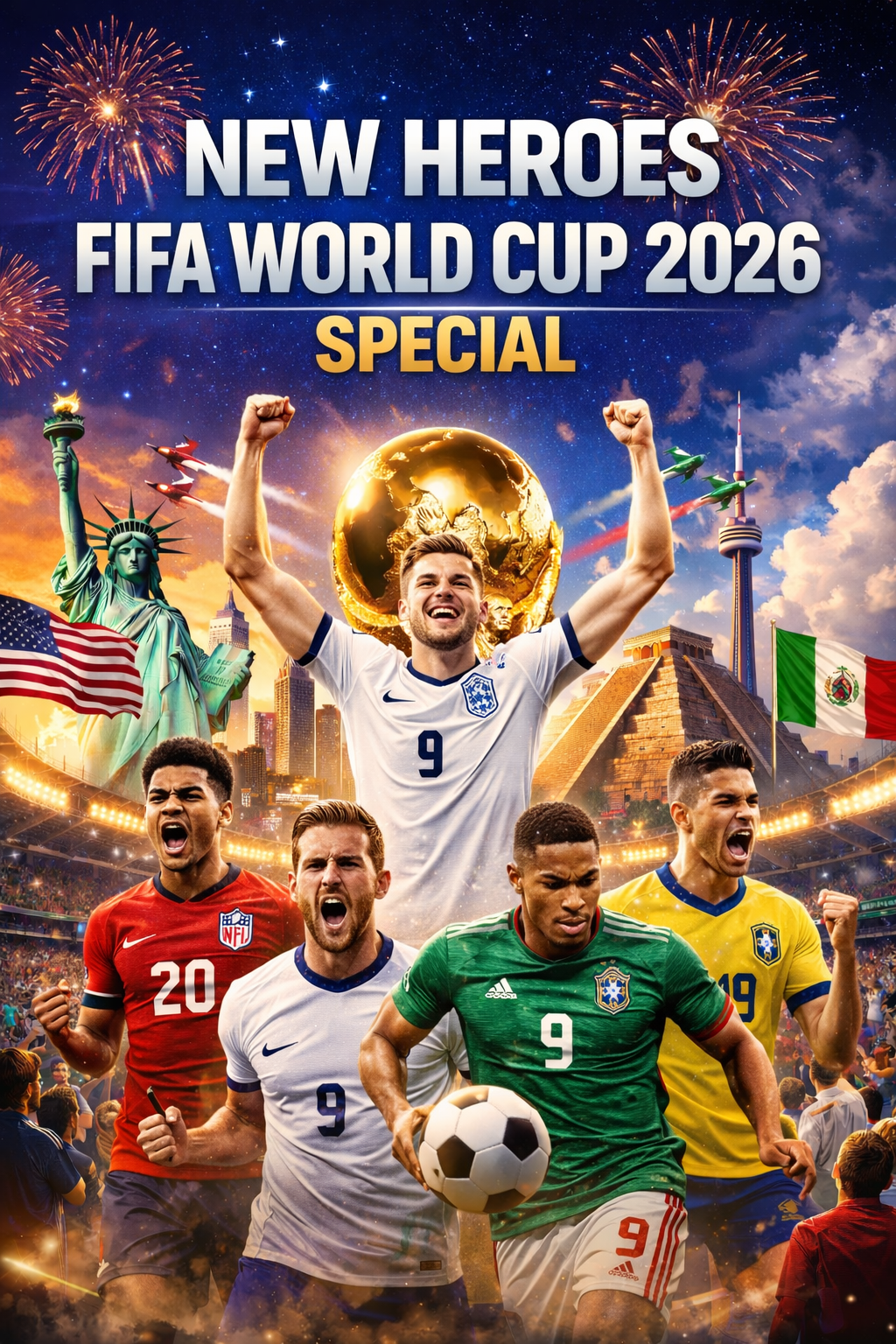
The 2026 FIFA World Cup is not just another tournament — it represents a bold transformation in the history of global football. With an expansive format, three host nations, and a shifting balance of power across continents, the 2026 edition promises to redefine how the world experiences the beautiful game.
From structural revolution to rising superstars, this World Cup is at the dawn of a new era.
Let’s dive deep into what makes it truly special.
Table of Contents
A Historic First: Three Host Nations
For the first time ever, the tournament will be hosted by three countries:
- United States
- Canada
- Mexico
Why This Is Significant
- Mexico becomes the first country in history to host three World Cups (1970, 1986, 2026).
- The United States returns as host after the commercially groundbreaking 1994 tournament.
- Canada hosts men’s World Cup matches for the first time.
This tri-nation collaboration symbolizes football’s rapid growth in North America — a region once considered secondary in global football culture.
The 48-Team Revolution: A Structural Shift
The biggest headline change is the expansion from 32 to 48 teams.
New Format Explained:
- 12 groups of 4 teams
- Top 2 teams from each group qualify
- 8 best third-placed teams advance
- Introduction of a Round of 32 knockout stage
Why This Changes Everything
- More Global Representation
Africa, Asia, and CONCACAF receive additional slots, increasing diversity and opportunity. - Greater Underdog Potential
Smaller nations now have a realistic pathway to knockout football. - Longer Tournament Duration
More matches mean deeper squad rotation and tactical management. - Physical & Tactical Demands
Teams must manage fatigue carefully across a longer competition.
This format is designed to make the World Cup more inclusive — but it also tests the balance between quality and quantity.
New Heroes on the Horizon
Every World Cup introduces new legends. In 2026, the expanded format increases the chance for breakout stars.
While traditional giants remain strong:
- Argentina
- France
- Brazil
- England
- Germany
The real excitement lies in emerging challengers:
- Morocco
- Japan
- United States
- Senegal
With more matches and broader participation, players from smaller footballing nations could become global icons overnight.
Tactical Evolution in Modern Football
By 2026, football tactics will likely be even more advanced.
Expected Tactical Trends:
- Fluid hybrid formations (3-2-4-1, 4-2-3-1 variations)
- Inverted fullbacks dominating midfield
- Aggressive high-press systems
- Data-driven match preparation
- Increased squad rotation strategies
Because of the larger tournament structure, depth will be just as important as starting quality. Nations with strong bench strength may outperform technically superior but thin squads.
Stadiums & Infrastructure: A Mega-Event Scale
North America offers some of the largest and most technologically advanced stadiums in the world. Expect:
- 70,000+ seat capacities
- Advanced broadcast production
- Fan zones across major cities
- High commercial sponsorship engagement
The final is expected to take place in the United States, potentially becoming the most-watched football match in history.
Economic & Cultural Transformation
The economic projection for 2026 is enormous:
- Billions in tourism revenue
- Boost in hospitality and local businesses
- Infrastructure upgrades
- Expanded global sponsorship deals
Culturally, this tournament may solidify football’s position in North America, especially in the United States where the sport is rapidly growing.
Why 2026 Could Change Football Forever
The 2026 World Cup is special because it combines:
- Structural expansion
- Commercial growth
- Tactical modernization
- Global inclusivity
- Emerging football powerhouses
If successful, it may permanently redefine how future World Cups are organized.
Final Analysis
“New Format, New Heroes” is not just a theme — it is the identity of the 2026 World Cup.
The expansion to 48 teams opens the door for:
- More nations to dream
- More players to shine
- More tactical innovation
- More dramatic storylines
This could be the World Cup where football’s competitive balance shifts and a new generation of icons is born.
Why is the 2026 World Cup format different?
Because it expands to 48 teams instead of 32, introducing 12 groups and a Round of 32 knockout stage.
Which countries are hosting the tournament?
The United States, Canada, and Mexico.
How does the new format benefit smaller nations?
More qualification slots mean greater global representation and higher chances of reaching knockout rounds.
Will the expanded format affect quality?
It may increase unpredictability, but strong squad depth will be crucial for maintaining high standards.
Who are early favorites for 2026?
Argentina, France, Brazil, England, and Germany are among the top contenders.
What makes the 2026 World Cup historically significant?
It is the first World Cup hosted by three nations and the first featuring 48 teams.