T20 World Cup Update: Smith Drafted In After Hazlewood Injury – Smart Move?
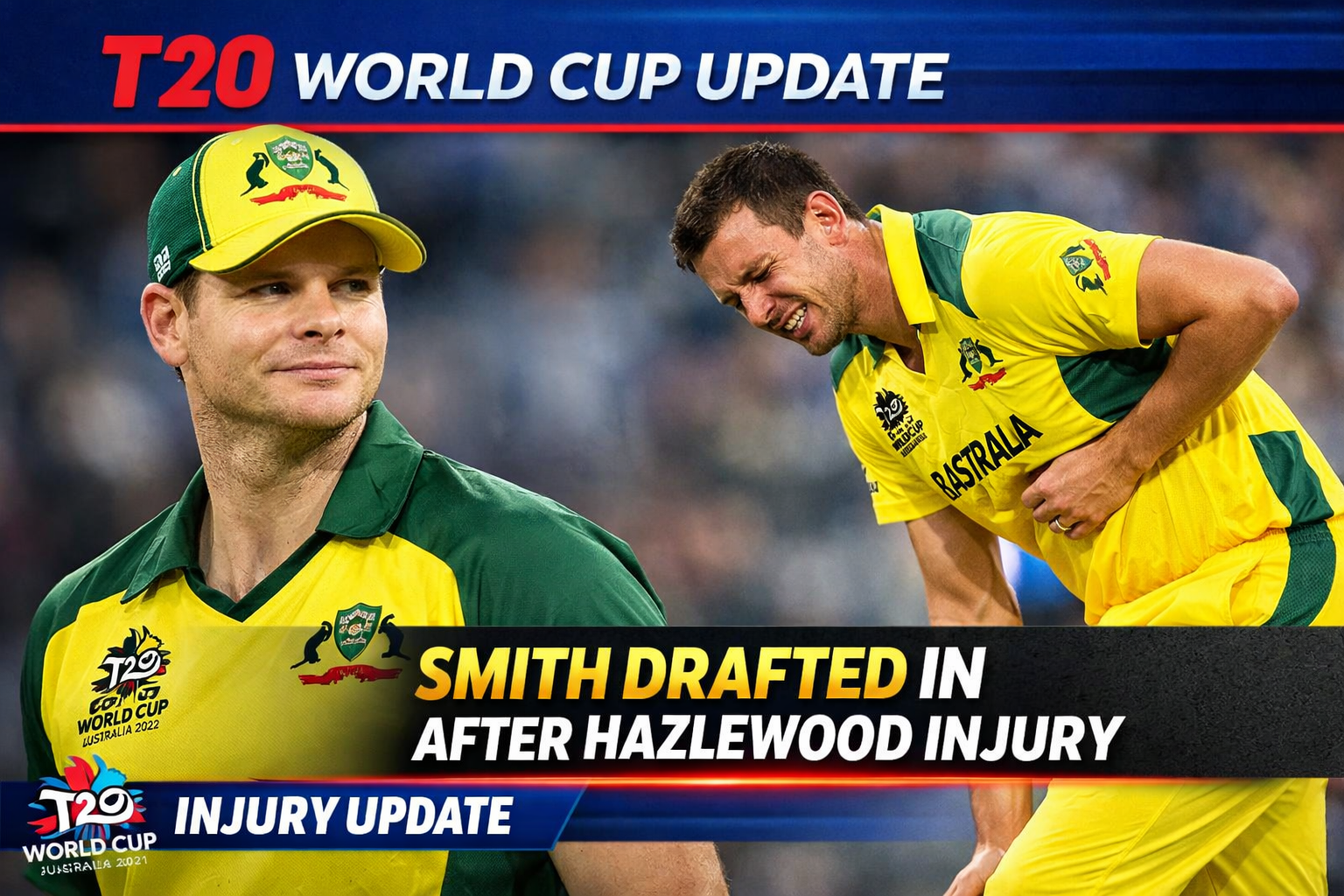
The ICC Men’s T20 World Cup 2026 has already started bringing drama — and not just on the field. Australia have been forced into a major squad reshuffle after spearhead Josh Hazlewood was ruled out with an injury. In response, voters called in Steve Smith.
At first glance, this may seem like a similar change in experience, but not in skills. Hazlewood is a frontline fast bowler; Smith is a technically sound hitter. So, the big discussion begins:
Is this a smart tactical move — or a risky gamble?
Let’s break it down in depth.
Table of Contents
The Impact of Hazlewood’s Injury
Hazlewood has been one of Australia’s most reliable bowlers across formats. In T20 cricket, his strengths include:
- Tight Powerplay control
- Hard lengths that limit boundary options
- Discipline under pressure
- Big-match temperament
Losing him means Australia is without a key new-ball enforcer. In high-pressure tournaments like the T20 World Cup, early breakthroughs often define momentum.
This isn’t just an injury — it’s a structural disruption.
Why Bring in Smith?
On paper, replacing a fast bowler with a batter changes team balance. But selectors rarely make emotional decisions in global tournaments.
Here are possible reasons behind the move:
1️⃣ Stability in the Middle Order
T20 cricket is unpredictable. If the top order collapses, someone must anchor the innings. Smith brings calmness, strike rotation, and experience.
2️⃣ Spin-Friendly Conditions
If pitches are slower, batting depth becomes more valuable than an additional pacer. Smith’s ability to play spin could be crucial.
3️⃣ Tactical Flexibility
Australia may already have multiple pace options in the squad. Instead of a direct bowling replacement, they might be reshaping the batting structure.
The Tactical Question: Balance vs Depth
Hazlewood offered control with the ball.
Smith provides stability with the bat.
But T20 cricket requires multi-dimensional players. The real question is:
Does Australia lose more in bowling control than it gains in batting stability?
If the bowling unit can compensate together, the inclusion of Smith can strengthen the overall XI. But if death overs become a weakness, Hazlewood’s absence will be sorely felt.
Psychological Angle
There’s another layer here — experience.
Smith has played in multiple World Cups and pressure situations. In knockout games, temperament often outweighs aggression. His calm presence in the dressing room can steady nerves in tense moments.
Sometimes squad decisions aren’t just about skill — they’re about mindset.
Possible Playing XI Adjustments
With Smith included, Australia might:
- Strengthen middle-order depth
- Promote aggressive openers without fear
- Rely on all-rounders for bowling balance
- Rotate pacers based on match conditions
This suggests a more flexible, adaptable approach rather than a direct replacement strategy.
Risk Factors
Every bold decision carries risk.
- If Australia struggles to take early wickets, Hazlewood’s absence will be highlighted.
- If Smith bats too slowly in high-scoring games, strike-rate criticism will emerge.
- If bowling depth proves insufficient in tight matches, the move may be questioned.
T20 tournaments magnify every decision.
Smart Move or Gamble?
This depends on conditions and execution.
If pitches favor batters and totals exceed 180 consistently, bowling control becomes vital — and Hazlewood’s loss hurts more.
If surfaces are tricky and collapses common, Smith’s composure becomes priceless.
In short: This is a strategic shift, not a panic move.
Final Verdict
Hazlewood’s injury is undoubtedly a setback. But Australia is known for its strategic thinking in world tournaments.
Bringing in Smith signals confidence in the squad’s depth and adaptability. Whether it’s a masterstroke or a miscalculation will depend on how the team balances its bowling resources and taps into Smith’s experience.
In T20 cricket, the margins are thin.
One calm innings, one crucial partnership or one tight over can define a tournament.
Why wasn’t Hazlewood replaced by another fast bowler?
Australia may already have sufficient pace options. Selectors possibly prioritized batting depth and flexibility over a like-for-like bowling replacement.
Can Smith adapt to modern T20 demands?
Yes. While not a traditional power-hitter, Smith adapts well, rotates strike effectively, and accelerates when needed.
How big is Hazlewood’s absence?
Very significant. He provides Powerplay control and experience in pressure situations. His absence could affect early breakthroughs.
Does this change Australia’s playing style?
Potentially. It may push them toward a more balanced, depth-based strategy rather than pure pace dominance.
Is this decision risky?
All mid-tournament changes carry risk. However, Australia’s depth and planning reduce the gamble factor.