The Untold Story of the FIFA World Cup’s Historic Journey
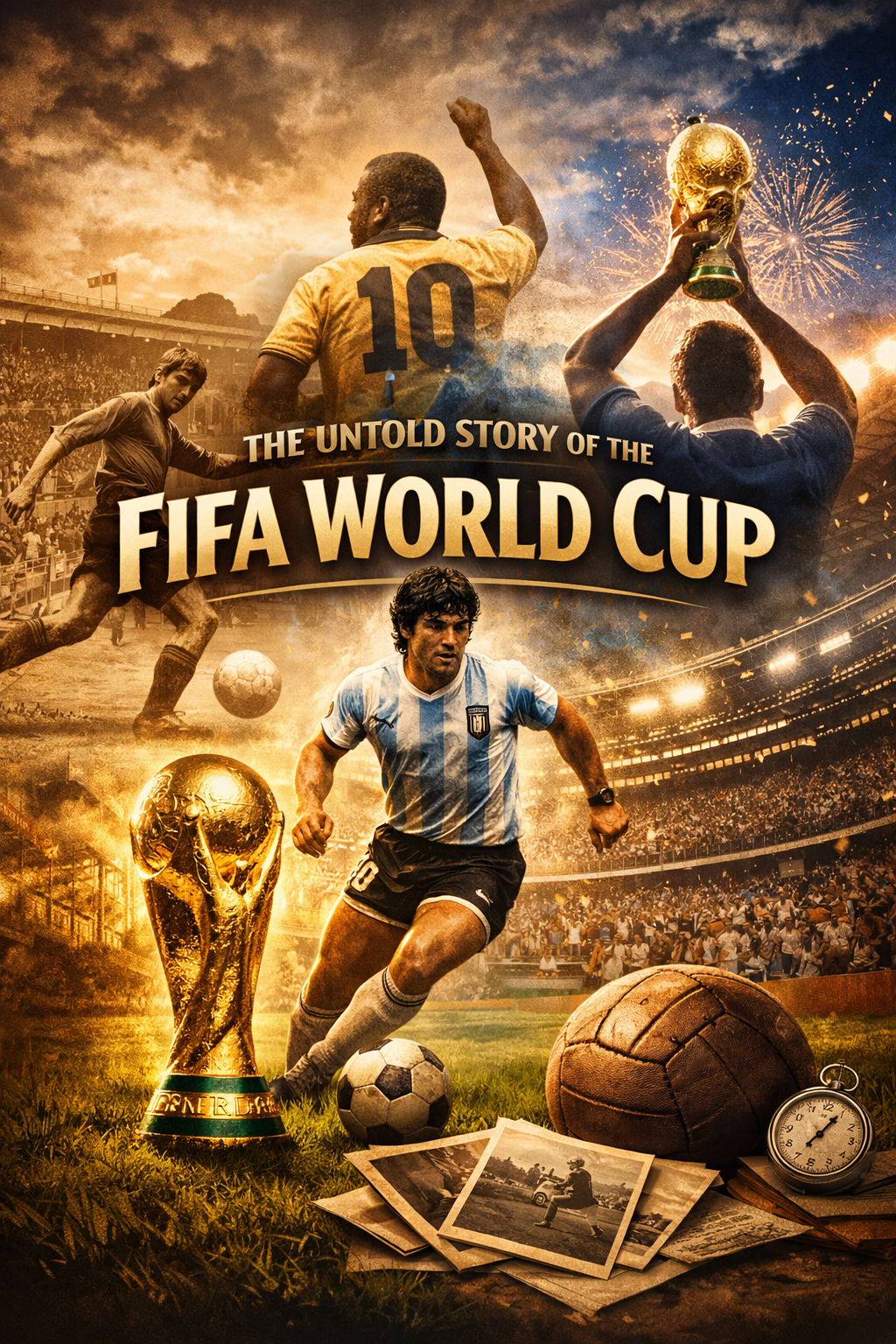
The FIFA World Cup is more than a football tournament – it is a living chronicle of human ambition, political change, cultural identity and sporting brilliance. Since its inception in 1930, the tournament has grown from a modest 13-team contest to the most-watched sporting event on the planet.
This is the untold story of how the World Cup has evolved – through war, revolution, globalization and technological transformation – to become football’s ultimate stage.
Table of Contents
1. The Birth of a Global Dream (1930–1938)
The World Cup was the vision of Jules Rimet, who believed football could unite nations. The inaugural tournament took place in Montevideo in 1930, hosted by Uruguay.
Only 13 teams participated, and travel was so difficult that European teams had to sail across the Atlantic. Uruguay won the first title, setting the tone for South American dominance in early tournaments.
By 1938, Europe had taken control, with Italy winning back-to-back titles. But dark clouds loomed—World War II would soon halt the tournament for 12 years.
Untold Reality: The early World Cups were as much diplomatic experiments as sporting events. Participation itself was a political statement.
2. Post-War Revival and the Rise of Legends (1950–1970)
After World War II, the tournament returned in 1950 in Brazil. The final match between Brazil and Uruguay—known as the “Maracanazo”—shocked nearly 200,000 fans at Maracanã Stadium.
The 1958 World Cup introduced the world to a 17-year-old genius: Pelé. His brilliance helped Brazil win its first title and signaled a new era of global stardom.
In 1970, Brazil’s team—often called the greatest ever—captivated fans with attacking football and artistry. Pelé’s third World Cup cemented his legacy as a global icon.
Untold Reality: Television played a massive role in expanding the World Cup’s reach. The 1970 tournament was the first broadcast in color, transforming football into a global spectacle.
3. Political Drama and Global Expansion (1974–1990)
By the 1970s, the World Cup was no longer just sport—it was geopolitics.
The 1978 tournament in Argentina was overshadowed by political controversy during military rule. Yet football triumphed, with Argentina lifting its first title.
The 1986 World Cup in Mexico delivered one of the most dramatic performances ever by Diego Maradona. His infamous “Hand of God” goal and the “Goal of the Century” against England captured the complexity of football—controversy and genius intertwined.
Meanwhile, European tactical systems evolved, and the tournament expanded to include more teams, increasing diversity and competitiveness.
Untold Reality: The Cold War subtly influenced rivalries, making matches symbolic battles between political ideologies.
4. Commercialization and the Era of Superstars (1994–2014)
The 1994 World Cup in United States marked a turning point. Football entered a new commercial era, attracting corporate sponsorship and massive global audiences.
The 1998 tournament in France crowned a multicultural French team as champions, reflecting a changing Europe.
By the 2000s, players like Zinedine Zidane, Ronaldo Nazário, Lionel Messi, and Cristiano Ronaldo transformed the World Cup into a showcase of global superstars.
In 2010, South Africa became the first African nation to host the tournament—a historic milestone for the continent.
Untold Reality: Broadcasting rights and sponsorship deals reshaped FIFA into one of the most powerful sporting organizations in the world.
5. Modern Glory and Technological Evolution (2018–2022)
Recent tournaments reflect football’s modern identity—diverse, digital, and data-driven.
The 2018 World Cup in Russia introduced VAR (Video Assistant Referee), altering how decisions are made.
The 2022 tournament in Qatar delivered one of the greatest finals ever, as Lionel Messi led Argentina to victory against France in a dramatic showdown against Kylian Mbappé.
Untold Reality: Technology now shapes tactics, fan engagement, and refereeing decisions—making the modern World Cup as much about data as destiny.
6. The Human Side of the World Cup
Behind the trophies lie powerful human stories:
- Underdogs defying odds
- Political tensions softened by sport
- Cultural pride expressed through national teams
- Young players becoming global heroes overnight
The World Cup is a mirror of society. Every tournament reflects the world at that moment in history.
The Evolution of the Trophy
The original trophy, known as the Jules Rimet Trophy, was replaced in 1974 by the current FIFA World Cup Trophy—an iconic symbol of global sporting excellence.
It represents not just victory, but legacy.
Conclusion: More Than Just a Game
From modest beginnings in 1930 to billion-viewer finals today, the FIFA World Cup’s journey is a story of resilience, transformation, and unity.
It has survived wars, political crises, scandals, and revolutions—yet it remains the heartbeat of global football.
The untold story is not just about who won—but about how the world changed along the way.
Who started the FIFA World Cup?
The tournament was founded by Jules Rimet, who believed football could promote global unity.
Which country won the first World Cup?
Uruguay won the inaugural tournament in 1930.
Why was the World Cup not held during 1942 and 1946?
It was canceled due to World War II.
Who is considered the greatest World Cup player of all time?
Many consider Pelé and Diego Maradona among the greatest, while Lionel Messi’s 2022 victory strengthened his claim.
How has technology changed the World Cup?
Technologies like VAR, goal-line technology, and advanced data analytics have made decisions more accurate and games more strategic.
Why is the World Cup so important globally?
Because it unites nations, showcases cultural pride, and represents the highest level of international football competition.