Breaking Down Trump’s FIFA Award: Politics Meets Football
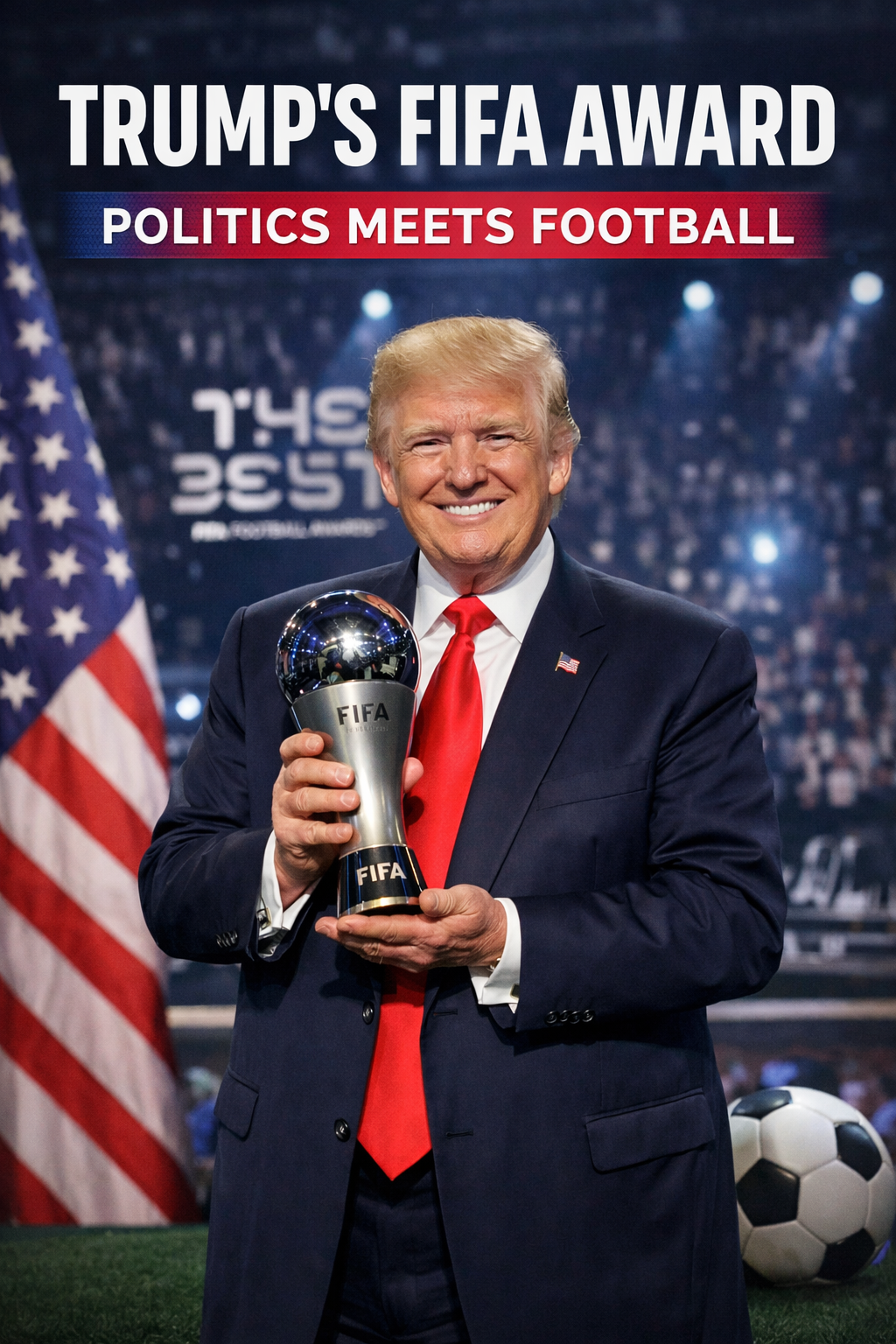
When the headlines linked Donald Trump to a FIFA-related recognition, it sparked global curiosity. Was it a football prize? A political gesture? A diplomatic move? Or something more symbolic?
To truly understand this moment, we need to examine how FIFA operates, how the 2026 FIFA World Cup rights were awarded, and how global politics inevitably intersect with the world’s biggest sporting event.
Table of Contents
1. What Was the “FIFA Award” Really About?
First, let’s clarify something important:
Donald Trump did not receive a traditional football honor such as:
- Golden Ball
- Golden Boot
- Best Coach Award
The recognition associated with him was linked to the successful North American bid to host the 2026 World Cup.
Such acknowledgments are often diplomatic in nature. When governments provide official guarantees, infrastructure commitments, and security assurances, international sports bodies sometimes recognize the political leadership involved.
So the “award” was not about athletic performance — it was about political facilitation.
2. The 2026 World Cup: A Historic Expansion
In 2018, FIFA members voted to award the 2026 tournament to a joint bid from:
- United States
- Canada
- Mexico
This marked several historic firsts:
- First World Cup hosted by three countries
- First 48-team tournament
- Largest World Cup in history
At the time, Trump was President of the United States. His administration publicly supported the bid and provided necessary government guarantees.
Government backing is a mandatory requirement for FIFA approval.
3. Why Government Support Matters to FIFA
Hosting a World Cup is a massive undertaking that requires:
Security and Safety
Millions of fans travel globally. National governments must coordinate security agencies and emergency services.
Visa Flexibility
International supporters, players, media personnel, and officials require smooth entry policies.
Infrastructure Development
Airports, roads, public transportation, and stadium upgrades require government cooperation.
Financial Guarantees
FIFA demands tax clarity and financial assurances from host nations.
Trump’s administration formally committed to meeting these standards — which strengthened the bid’s credibility.
4. The Political Context: A Divided Reaction
This recognition became controversial largely because of Trump’s global political image.
Supporters’ Argument
Supporters claim:
- His leadership helped secure the bid.
- Hosting the tournament will generate billions in economic impact.
- The event strengthens North American cooperation.
They see the acknowledgment as deserved credit for executive support.
Critics’ Argument
Critics argue:
- Sport should remain separate from politics.
- Immigration rhetoric conflicted with football’s inclusive values.
- FIFA’s history with political leaders often raises transparency concerns.
The reaction revealed how modern sport cannot be separated from political narratives.
5. A Broader Historical Pattern
This is not the first time politics and football have intersected.
Throughout history:
- Governments have funded Olympic bids.
- Political leaders attend World Cup ceremonies.
- Major tournaments have been used as diplomatic platforms.
International sporting bodies frequently acknowledge host governments. Such recognition is typically symbolic — not competitive.
Trump’s FIFA-related moment fits this longstanding pattern.
6. The Economics Behind the Decision
The 2026 World Cup is projected to be a financial powerhouse:
- 100+ matches
- Billions in global viewership
- Massive broadcasting and sponsorship revenue
The United States will host the majority of matches, including crucial knockout games.
For any political administration, securing such an event can be framed as:
- An economic win
- A tourism catalyst
- A global branding opportunity
From this angle, political recognition becomes less surprising.
7. Soft Power and Global Image
Hosting a World Cup enhances national soft power — the ability to influence through culture rather than force.
For the United States, Canada, and Mexico, the 2026 event symbolizes:
- Regional cooperation
- Economic partnership
- Cultural exchange
Trump’s involvement was positioned as part of that larger diplomatic effort.
8. The Core Reality: Symbolism Over Sport
The real story behind Trump’s FIFA award is simple:
It was symbolic recognition tied to government support for hosting the 2026 World Cup.
It was not:
- A football trophy
- A player achievement
- A coaching honor
It was political acknowledgment in a sporting context.
Conclusion: Where Politics and Football Collide
Breaking down Trump’s FIFA award reveals a larger truth: global sport and political power are deeply intertwined.
The recognition reflected:
- Government involvement in securing hosting rights
- Economic ambition
- Diplomatic engagement
- The unavoidable intersection of sport and statecraft
While controversy surrounded the narrative, the underlying reason was administrative and diplomatic — not athletic.
When the 2026 World Cup begins, attention will shift from politicians to players. Goals, drama, and national pride will dominate headlines.
Did Donald Trump win a football award from FIFA?
No. The recognition was related to government support for the 2026 World Cup bid.
Why does FIFA involve political leaders in hosting decisions?
Because organizing a World Cup requires security guarantees, financial backing, infrastructure planning, and visa policies — all controlled by governments.
Is it unusual for political leaders to be recognized by sports organizations?
No. It is common when governments play a key role in securing or organizing major tournaments.
Was the 2026 World Cup bid controversial?
Like many global decisions, it sparked debate, but FIFA members officially voted in favor of the North American joint bid.
What makes the 2026 World Cup historic?
It will be the first 48-team tournament and the first co-hosted by three nations.