World Cup Wonders: The Most Memorable Matches in History
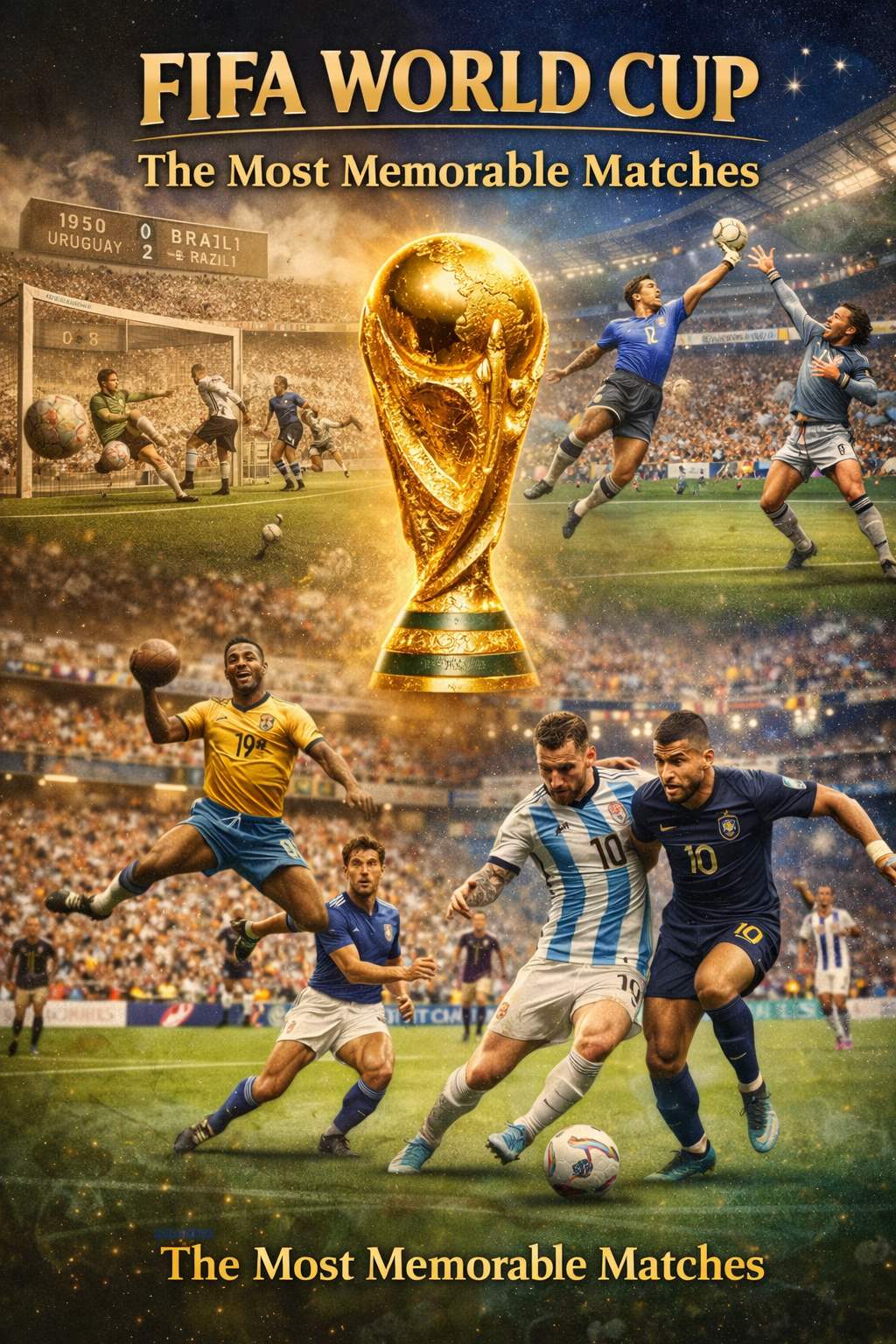
The FIFA World Cup is football’s biggest stage — a tournament where pressure creates legends and matches become eternal memories. Over the decades, certain games have transcended the sport, reshaped tactics, rewritten history, and united or broken millions of hearts.
This in-depth analysis explores the most memorable World Cup matches ever played — the games that changed football forever.
Table of Contents
1. Uruguay vs Brazil (1950) – The Maracanazo
Location: Maracanã Stadium
Result: Uruguay 2–1 Brazil
In front of nearly 200,000 Brazilian fans in Rio de Janeiro, Uruguay stunned the hosts in what became known as the “Maracanazo.”
Why It Was Historic:
- Brazil needed only a draw to win the title.
- Uruguay’s comeback silenced the largest crowd in football history.
- It reshaped Brazilian football identity, influencing future tactical revolutions.
This match proved that football’s script is never predictable.
2. Brazil vs Italy (1970 Final) – The Beautiful Game Perfected
Result: Brazil 4–1 Italy
Star: Pelé
The 1970 final in Mexico is often called the greatest World Cup final ever. Brazil’s fluid passing, creativity, and attacking brilliance were unmatched.
Why It Changed Football:
- Showcased total attacking harmony.
- Popularized creative, expressive football worldwide.
- Cemented Pelé’s legendary status.
Carlos Alberto’s final goal remains one of the most iconic team goals in history.
3. Italy vs West Germany (1970 Semifinal) – The “Game of the Century”
Result: Italy 4–3 West Germany (AET)**
Played at the Estadio Azteca, this semifinal had five goals in extra time — an unprecedented spectacle.
Impact:
- Demonstrated endurance and drama at its peak.
- Elevated the World Cup’s global excitement.
- Showed the tactical evolution toward more attacking play.
It remains one of the most thrilling matches ever played.
4. Argentina vs England (1986 Quarterfinal) – Genius and Controversy
Result: Argentina 2–1 England
Star: Diego Maradona
This match had two of the most famous goals in football history:
- The “Hand of God”
- The “Goal of the Century”
Why It Matters:
- Combined controversy and brilliance in 90 minutes.
- Highlighted individual dominance on the world stage.
- Sparked endless debates about fairness and technology.
Maradona’s solo goal is still considered the greatest ever scored in a World Cup.
5. France vs Brazil (1998 Final) – The Rise of a New Power
Result: France 3–0 Brazil
Star: Zinedine Zidane
Hosted in France, this final symbolized the arrival of a multicultural French team at the top of world football.
Significance:
- Marked a generational shift.
- Showed defensive organization combined with attacking precision.
- Inspired millions across Europe and Africa.
6. Germany vs Brazil (2014 Semifinal) – The 7–1 Shock
Result: Germany 7–1 Brazil
In Belo Horizonte, Germany dismantled the hosts in one of the most shocking results in football history.
Why It Changed Modern Football:
- Highlighted Germany’s data-driven preparation.
- Showed the importance of structured youth development.
- Marked the decline of Brazil’s traditional defensive structure.
This match symbolized football’s modern tactical era.
7. Argentina vs France (2022 Final) – A Modern Classic
Result: Argentina 3–3 France (Argentina won on penalties)**
Star: Lionel Messi
Widely regarded as the greatest World Cup final ever, this game had:
- A dramatic French comeback.
- A hat-trick from Kylian Mbappé.
- A fairytale ending for Messi.
Why It’s Legendary:
- Blended legacy and new-generation brilliance.
- Delivered non-stop drama until penalties.
- Cemented Messi’s place in football immortality.
Tactical Evolution Reflected in Great Matches
These unforgettable games reflect how football evolved:
1950s–70s:
- Direct play and individual brilliance.
1980s–90s:
- Tactical discipline and defensive organization.
2000s–Present:
- High pressing systems.
- Data analytics.
- Squad depth and sports science integration.
Each iconic match did more than entertain — it influenced coaching philosophies worldwide.
Emotional and Cultural Impact
World Cup matches are not just games; they are national events.
They:
- Unite countries in celebration.
- Shape childhood memories.
- Inspire future stars.
- Reflect political and cultural shifts.
For fans, these matches are emotional time capsules — moments frozen in time.
What Makes a World Cup Match Truly Memorable?
A match becomes legendary when it has:
- High stakes
- Dramatic twists
- Iconic individual performances
- Tactical innovation
- Emotional resonance
When all five combine, history is made.
Conclusion
From the Maracanazo to the 2022 masterpiece, the FIFA World Cup continues to deliver moments that define generations. These matches are not just highlights — they are chapters in football’s global story.
Every four years, the world waits for the next unforgettable 90 minutes.
And history always delivers.
Which World Cup match is considered the greatest of all time?
Many consider the 2022 Argentina vs France final or the 1970 Brazil vs Italy final as the greatest ever.
Why is the 1950 Uruguay vs Brazil match so famous?
Because of the massive upset in front of a record-breaking crowd, changing Brazil’s football culture forever.
What match had the most dramatic extra time?
Italy vs West Germany in 1970, with five extra-time goals.
Which player has delivered the most iconic World Cup performance?
Maradona (1986), Pelé (1970), and Messi (2022) are often cited.
Why do World Cup matches create such strong emotions?
Because they represent national pride, once-in-a-lifetime moments, and global attention.